Malaysia Salary Calculator 2025: Your Complete Payroll and Compliance Guide
Updated for 2025! Discover how Malaysia’s latest EPF, SOCSO, EIS & PCB rules affect take-home pay, learn the correct method to calculate net salaries step‑by‑step, and ensure your payroll stays compliant — whether you’re managing a local team or hiring foreign staff.
Updated for 2025 — all the new EPF, SOCSO, EIS & PCB changes included!
If you’re the one in charge of calculating staff salaries every month, you already know — one small mistake can snowball into a ‘boss calling you at 7 PM’ kind of disaster.
This guide (and calculator!) will help you understand exactly how to calculate net pay, keep up with Malaysia’s latest payroll rules, and make sure every payslip is LHDN-approved.
What's New in Malaysia Payroll for 2025?
Before you start punching in numbers, here’s what changed this year:
Change
2025 Update
Why It Matters
Minimum Wage
RM1,700/month
Affects all employees (except domestic workers)
EPF (KWSP)
2% mandatory for non-Malaysians (from Oct 2025)
New rule for expats and foreign hires
SOCSO / EIS Ceiling
Raised to RM6,000
Petty cash advance, project floaHigher coverage and slightly higher deductionst
Tax Reliefs
Updated YA 2025 reliefs
Impacts PCB calculations
If your payroll spreadsheet still uses 2024 figures, it’s officially outdated.
Example: If your gross salary is RM 4,000, your net take-home pay after all deductions is roughly RM 3,420.
Payroll Tip for Companies Hiring Foreign Workers
Starting October 2025, even non-Malaysian employees with valid work passes must contribute 2% EPF each, matched by their employer.
Example: A foreign worker earning RM 3,000 → Employer pays RM 60 EPF, Employee pays RM 60 EPF.
So, yes — your payroll template needs a foreign-worker column now.
To get your accounting sorted — including accruals, salary payouts, EPF & SOCSO journal entries — check out our full guide on how to record salary, EPF & SOCSO payments and make sure your books stay compliant and audit-ready.
Salary Proration & Overtime – The Correct Way
Prorated Salary (new joiners / resignations)
Salary = Monthly Salary × (Days Worked / Days in Pay Period)
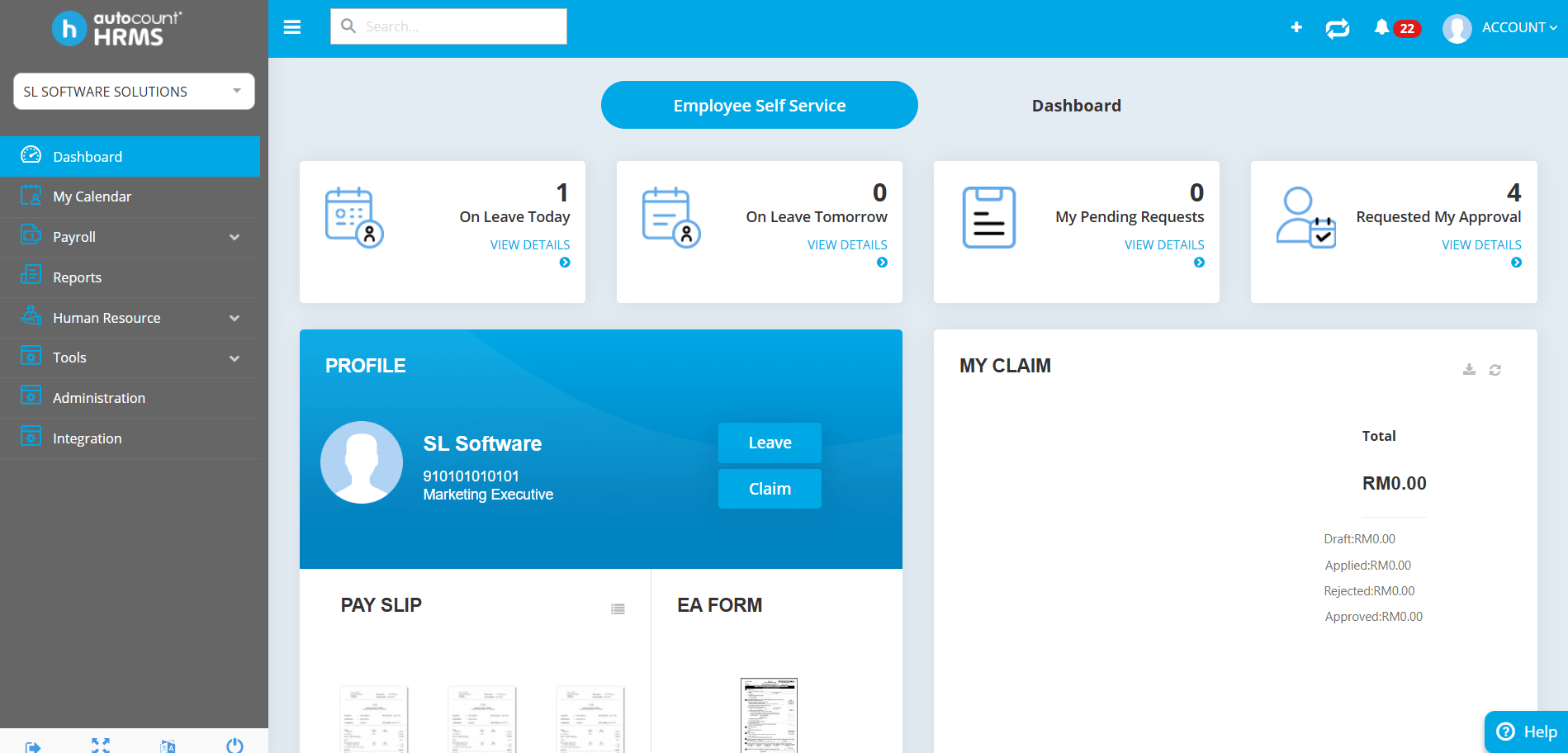
That’s why many companies now use AutoCount Payroll to handle the heavy lifting.
Always up to date: Auto-updates statutory rates and PCB formulas.
One-click reports: Generate EPF, SOCSO and EIS files for submission.
Error-proof calculations: Handles proration, bonuses and allowances accurately.
Syncs with AutoCount Accounting: So your payroll costs match your books instantly.
When your payroll is automated and compliant, you can spend less time fixing errors and more time drinking that well-earned kopi O.
If your team is still using Excel to calculate EPF and PCB every month, it’s time to level up. With AutoCount Payroll, compliance is no longer a headache — it’s built in.
Final Takeaway
Payroll is not just about numbers — it’s about trust and compliance.
By using the latest Salary Calculator Malaysia 2025, understanding the rules, and leveraging a tool like AutoCount Payroll, you can run accurate, stress-free payroll every month.
This salary calculator provides estimates for educational purposes only. Actual take-home pay may vary based on individual tax circumstances, specific employment terms, and exact statutory calculations. Always consult with qualified professionals or use verified payroll software like AutoCount Payroll for official salary processing.
Frequently Asked Questions
Why is my net salary different from what shows in the calculator?
Our calculator gives you a close estimate, but small differences can happen because the actual PCB uses LHDN’s complex monthly tax tables and your specific tax reliefs declared on TP1/TP3 forms. For 100% accuracy that’s LHDN-approved, you’d need a proper payroll system like AutoCount Payroll.
When does the 2% EPF for foreign workers start?
The mandatory 2% EPF contribution for non-Malaysian employees starts from October 2025. This applies to foreign workers with valid work passes, and employers must match this 2% contribution. So if you’re hiring foreign workers, make sure your payroll template has a separate column for this starting October 2025.
Why do we use 26 days to calculate hourly rates and leave pay?
We use 26 days because that’s what the Employment Act 1955 recognizes as the standard divisor. This applies to calculating your hourly rate for overtime and paying out unused leave when someone resigns. Using 26 days instead of calendar days ensures compliance and fair calculation for all employees.
What's the maximum salary for SOCSO and EIS deductions?
For 2025, the SOCSO and EIS contribution ceiling is RM6,000. This means if you earn RM6,000 or less, deductions are calculated on your full salary. If you earn more than RM6,000, deductions are capped at RM6,000. So if you earn RM8,000, your SOCSO and EIS are still calculated as if you earn RM6,000.
How do I make sure my payroll is always compliant?
Manual calculations in Excel can easily become outdated when rules change. The safest way is to use dedicated payroll software like AutoCount Payroll because it auto-updates statutory rates, generates ready-to-submit files for government agencies, handles complex calculations accurately, and syncs with accounting software. This saves you from the “boss calling you at 7 PM” kind of payroll disasters!
Try the Malaysia Net Salary Calculator 2025
Instantly see your take-home pay with EPF, SOCSO, EIS & PCB deductions calculated for you.