
Bookkeeping vs Accounting: What’s the Difference?
In bookkeeping vs accounting, bookkeeping records your daily transactions. Accounting turns those records into financial reports and business decisions. Understand both—and know when your business needs each.
Compare both roles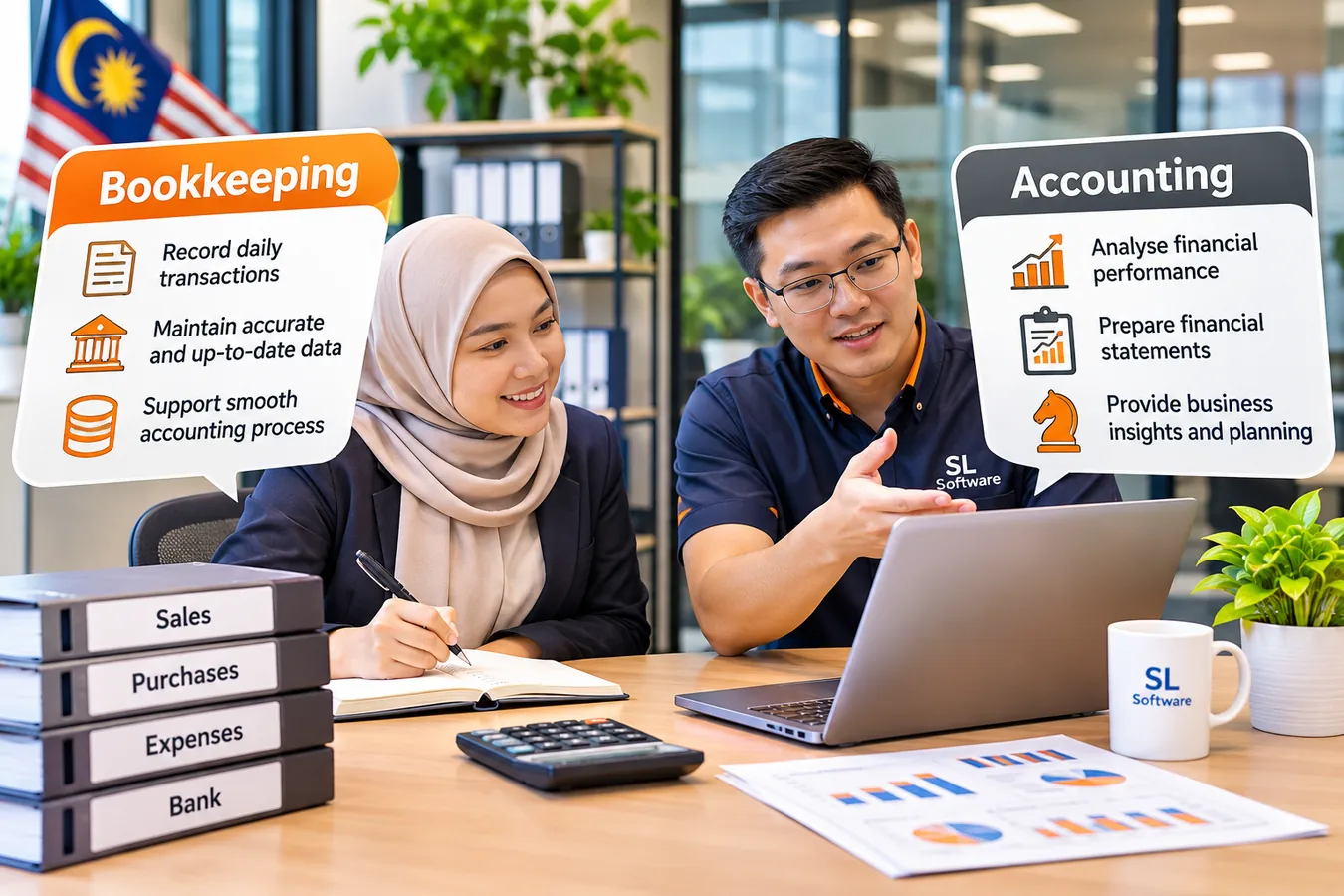
Accurate records first. Better decisions next.
Bookkeeping vs accounting is not a contest: both support the same business, but solve different problems. One captures what happened; the other explains performance, financial position and what the business can do next.
What is bookkeeping?
Bookkeeping is the consistent recording and organisation of financial transactions.
- Enter sales and purchases
- Record receipts and payments
- Maintain customer and supplier balances
- Reconcile bank and e-wallet transactions
- Keep invoices, receipts and supporting documents
What is accounting?
Accounting reviews, adjusts and interprets financial records for reporting, compliance and planning.
- Prepare financial statements
- Review accruals and depreciation
- Analyse profit, cash flow and costs
- Prepare budgets and forecasts
- Support tax and management reporting
Bookkeeping vs accounting: 5 key differences
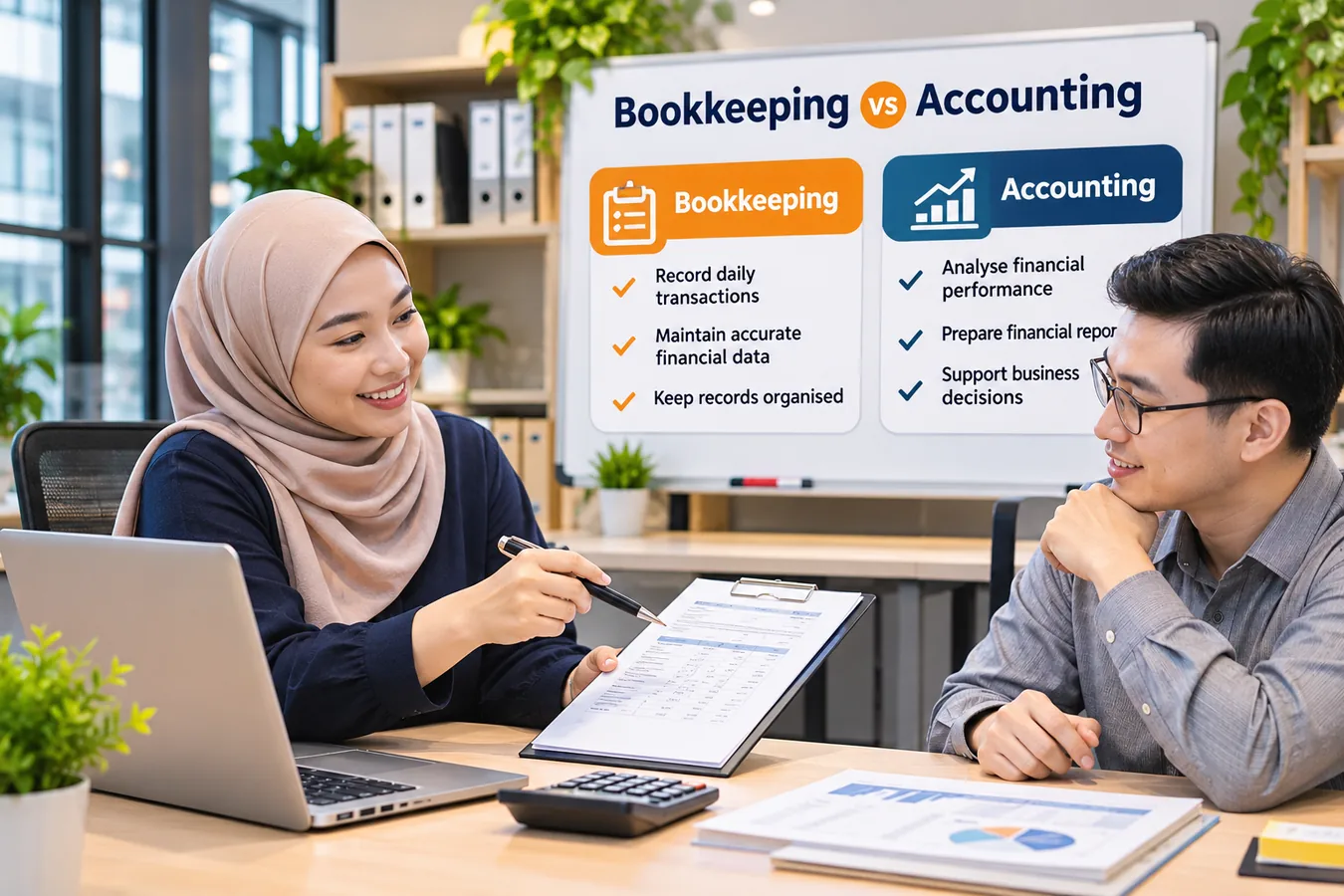
| Area | Bookkeeping | Accounting |
|---|---|---|
| Main focus | Record transactions correctly | Interpret and report financial results |
| Typical frequency | Daily or weekly | Monthly, quarterly and yearly |
| Key outputs | Ledgers, reconciliations, transaction records | Financial statements, budgets, analysis |
| Business question | What happened? | What does it mean? |
| Example | Record RM5,000 in customer sales | Assess margin, expenses and actual profit |
A simple way to remember bookkeeping vs accounting: bookkeeping answers “what came in and what went out”, while accounting answers “are we really making money, and what should we do next”. When daily entries are late or incomplete, every monthly report built on them becomes less reliable.

Know your numbers, not just your sales
Cash flow: Track outstanding customer payments and supplier balances before cash becomes tight.
Profitability: Understand costs and margins rather than assuming strong sales mean strong profits.
Compliance: Keep organised records for tax, audit and statutory reporting.
Planning: Use updated financial results to guide pricing, stock, hiring and budgets.
What this looks like in daily operations
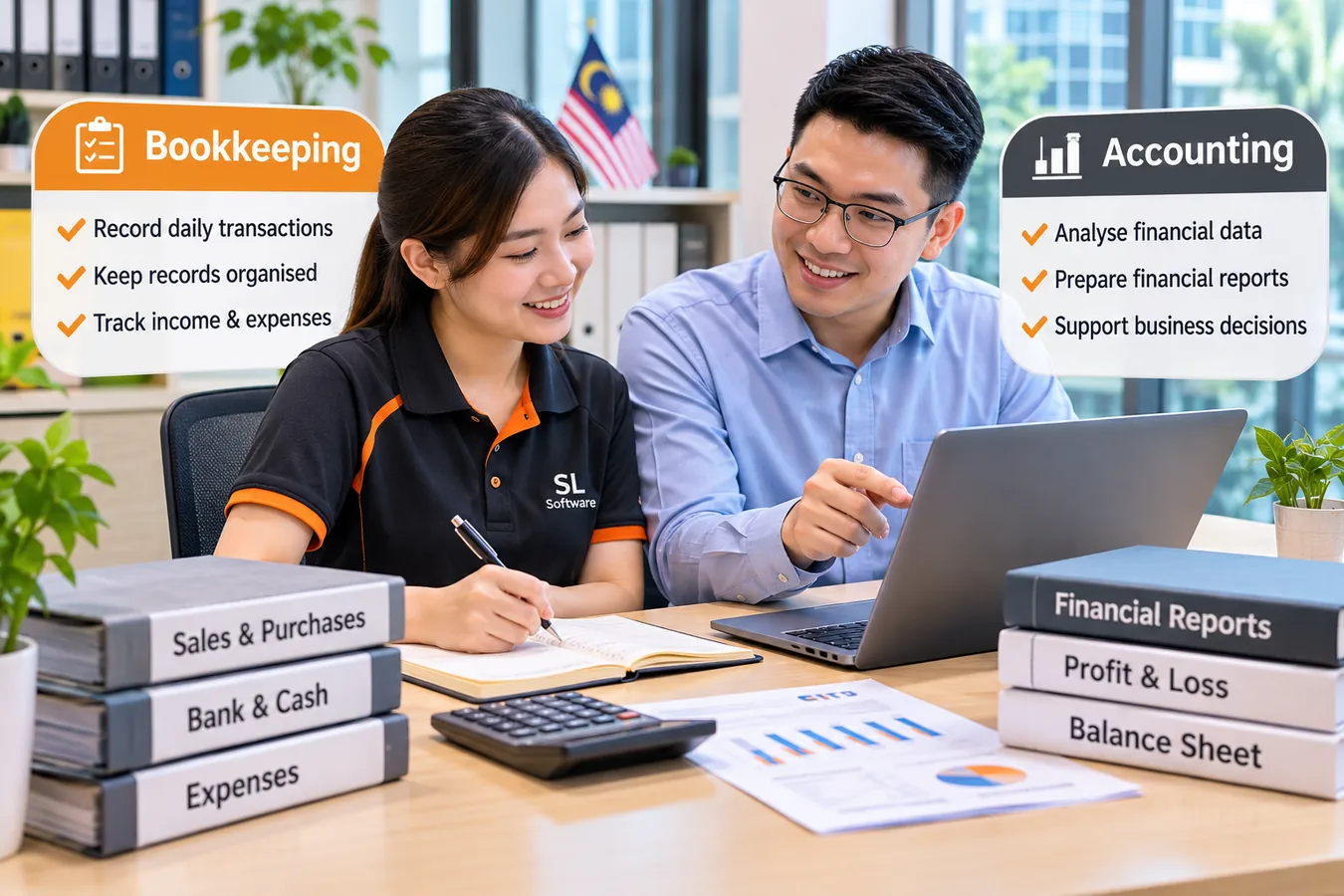
POS & e-Commerce
Bookkeeping captures sales, refunds and payment fees. Accounting reviews product margins and stock-purchasing decisions.
Multiple e-wallets
Bookkeeping reconciles daily settlements. Accounting assesses food costs, wastage and menu profitability.
Project billing
Bookkeeping records invoices and receipts. Accounting evaluates project margins and collection cycles.
DIY, hire a bookkeeper or engage an accountant?

Do it yourself
May suit a very small business with few transactions and someone confident managing records and basic requirements.
Hire a bookkeeper
Useful when recurring sales, purchases, AR/AP and multi-channel payment reconciliation take substantial time.
Use an accountant
Helpful for monthly closing, financial statements, tax coordination, budgets and funding discussions.
Combine both
Many SMEs keep transaction records internally while engaging an accountant for review, reporting and advice.
Bookkeeping vs accounting FAQs
Can one person handle both bookkeeping and accounting?
Yes, especially in smaller businesses, provided the person has the necessary skills and the work receives appropriate review.
Does accounting software replace an accountant?
No. Software helps organise transactions and generate reports, while judgement, review and professional advice still matter.
Which should a new SME start with?
Start by keeping complete, consistent transaction records. Then establish regular accounting review and reporting as operations grow.
Is bookkeeping vs accounting a choice between one or the other?
No. In bookkeeping vs accounting, bookkeeping feeds accounting. Clean daily records help your accountant close each month faster, spot errors earlier and prepare reliable financial statements for owners, banks and auditors.
How long must Malaysian companies keep accounting records?
Under LHDN Public Ruling No. 4/2000 (Revised), companies generally keep sufficient records for at least 7 years from the end of the year the business income relates to. Good bookkeeping makes this easier, and your accountant or tax agent can confirm what applies to your business.
Can accounting software help with both bookkeeping and accounting?
Yes. Accounting software such as AutoCount lets your team record sales, purchases and payments once, then produce ledgers, profit and loss statements and balance sheets from the same data. Your accountant still reviews the figures, but spends less time fixing entries.
Build a better accounting workflow for your business
Explore AutoCount Accounting or AutoCount Cloud Accounting to handle bookkeeping vs accounting tasks in one system, from digital bookkeeping to financial reporting.
Explore AutoCount AccountingBookkeeping + Accounting
Record accurately, review regularly and turn financial data into better business decisions.