
RETAIL INSIGHTS / MEMBERSHIP & REWARDS
Loyalty Points vs Discounts:
5 Key Retail Differences
Loyalty points vs discounts: one builds towards a future reward; the other reduces today’s price. Choose the approach that fits your customers, margins and business goal.

Clear rewards. Practical rules. Better-informed decisions.
01 / THE ESSENTIAL COMPARISON
Loyalty Points vs Discounts at a Glance
Neither approach is automatically better. Match the offer to a specific goal and a cost your business can support.
Start with one measurable objective: selected stock movement, a stronger average basket or more return visits. Comparing loyalty points vs discounts is most useful when the audience, campaign period and product mix are similar.
01 / KEY DIFFERENCE
Reward timing
Discounts: A lower price on an eligible purchase now.
Points: A balance towards a later reward under programme rules.
02 / KEY DIFFERENCE
Main objective
Discounts: Support a purchase today or move selected stock.
Points: Encourage continued participation where repeat purchases are realistic.
03 / KEY DIFFERENCE
Customer explanation
Discounts: State the saving, qualifying items and exclusions.
Points: Explain earning rates, reward value, validity and redemption conditions.
04 / KEY DIFFERENCE
Business cost
Discounts: Selling price falls on each discounted transaction.
Points: Reward cost depends on what is earned and redeemed. Points are not free.
05 / KEY DIFFERENCE
What to measure
Discounts: Review sales, gross margin and response during the offer.
Points: Review return visits, redemption, reward cost and purchasing behaviour.

02 / CHOOSE BY CUSTOMER BEHAVIOUR
Reward Today’s Purchase or the Next Visit
Use a targeted discount for a short campaign or selected products. Consider points when customers have a realistic reason to return and the reward feels achievable.
You can use both. Decide whether discounted items earn points and whether vouchers can be combined with promotions. Confirm your software supports those rules.
For branches, read our multi-outlet loyalty programme guide.
03 / KNOW YOUR MARGIN
A Small Discount Can Have a Larger Profit Impact
Consider an item priced at RM100 with a product cost of RM60. A RM10 discount changes the calculation:
BEFORE DISCOUNT
RM40
RM100 selling price − RM60 product cost.
AFTER RM10 OFF
RM30
RM90 selling price − RM60 product cost.
That is 25% less gross profit per item. This simplified example excludes tax, operating costs and other charges; it is not net profit.
A future RM10 voucher changes reward timing, not the need to control cost. Some customers would return anyway, and others may never redeem.
04 / MAKE THE RULES WORK
Connect Rewards with Your POS
Before launch, define eligible purchases, earning rates, redemption value, expiry, returns and promotion stacking. Train staff to handle exceptions consistently.
Review return visits, average purchase value, gross margin and programme costs over comparable periods. Allow for product mix, festivals and stock availability.
Explore AutoCount OneRewards for supported membership and reward workflows. Confirm compatibility and configuration with SL Software.
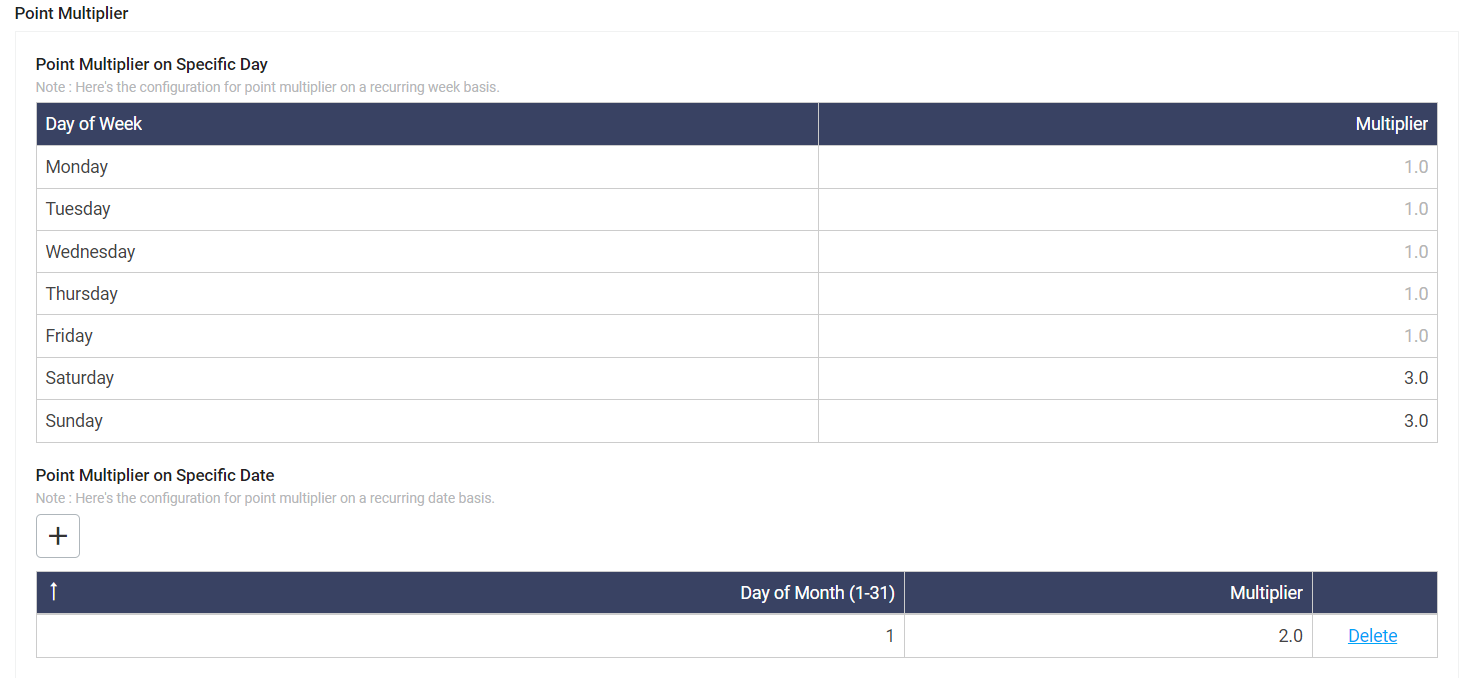
Official product screen · sample settings, not a recommended reward rate.
See AutoCount’s official OneRewards setup guide for software instructions, or plan your retail loyalty points programme.
Quick Answers
Do points guarantee repeat purchases?
No. Reward value, convenience, service and the overall shopping experience also matter.
Should small shops stop offering discounts?
No. Use them where the objective and margins support the offer, with clear conditions.
Can points and discounts work together?
Yes, where your programme and software allow it. Set earning, redemption and stacking rules before launch.
Choose Rewards Around Your Business Goal
Start with customer behaviour, then compare cost and staff workload. Discuss your membership rules and POS requirements with SL Software.