
Payroll Deductions in Malaysia: Types, Rules & Compliance
Know which payroll deductions in Malaysia are mandatory, when other deductions are permitted, and how to review payslips without missing statutory obligations.
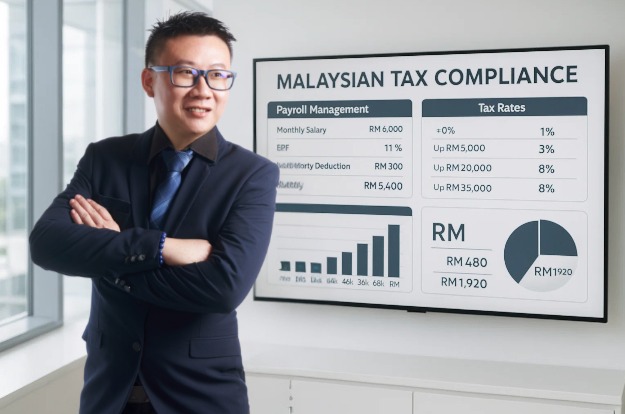
Four common statutory deductions
For payroll deductions in Malaysia, most payroll teams regularly calculate employee EPF, SOCSO, EIS and monthly tax deductions (PCB). Applicable coverage and contribution schedules depend on employee particulars and current rules.
EPF
Retirement savings contributions from eligible employees, with a separate employer share.
SOCSO
Social security deductions based on the relevant employee category and contribution schedule.
EIS
Employment insurance contributions for qualifying employees.
PCB / MTD
Monthly income tax deductions computed using the current LHDN method.
Payroll deductions in Malaysia: mandatory versus authorised
Statutory deductions
EPF, SOCSO, EIS and PCB are processed under their respective laws and applicable contribution rules. Use the official schedules or approved calculation methods instead of fixed percentages for every employee.
Other permitted deductions
Examples include certain salary-advance repayments, employee-requested deductions and other deductions permitted by the Employment Act. Written employee consent alone does not make every deduction lawful: some cases require further conditions or approval.
Check section 24 of the Employment Act and the specific payroll arrangement.
Comparing payroll deductions in Malaysia
| Deduction type | Who usually bears it? | What payroll should check |
|---|---|---|
| EPF (employee) | Employee contribution | Age, residency/citizenship status, applicable contribution schedule and eligible wages |
| SOCSO (employee) | Employee contribution where applicable | Correct insured employee category and PERKESO contribution table |
| EIS | Employee portion where applicable | Covered employee status and current contribution table |
| PCB / MTD | Employee income tax | Current LHDN method and relevant remuneration or relief information |
| Salary-advance or other deductions | Employee, if legally permitted | Statutory basis, required consent or permission, and deduction limits |
| Employer EPF / SOCSO / EIS share | Employer | Record separately as employer expense rather than employee deduction |
Avoid treating this overview as a substitute for the official contribution tables and guidance from KWSP, PERKESO and LHDN.
When can employers deduct from wages?
Follow a lawful deduction basis
Section 24 of the Employment Act 1955 governs many payroll deductions in Malaysia, covering Peninsular Malaysia and Labuan. A deduction must fall within a lawful category, with required consent or approvals where applicable.
Do not deduct for mistakes, damages or employer business costs simply because the employee has signed a general consent form.
Check limits and payslip records
Payroll should review the Act's deduction limits and exceptions, document the amount and reason, and show the deduction clearly on the employee's pay record.
Sabah and Sarawak have separate labour ordinances. Review local requirements for employees there.
A monthly checklist for payroll deductions in Malaysia
Verify staff details
Confirm employee category, wages and relevant statutory information.
Apply schedules
Use current KWSP, PERKESO and LHDN contribution or tax calculations.
Check authorisation
Review the legal basis for nonstatutory deductions and keep supporting records.
Reconcile payslips
Match gross pay, employee deductions, employer contributions and net pay.
Need help checking a payroll calculation? See our payroll components and calculation formulas guide.
Common errors with payroll deductions in Malaysia
Age, wage band and employee category can change statutory treatment. Check the applicable table.
Employee and employer shares must be separately recorded so take-home pay is not understated.
Nonstatutory deductions must satisfy the relevant legal category, consent or approval requirements and limits.
Incorrect PCB, missed deductions or unclear payslips can create avoidable employee disputes and corrections.
Payroll deductions in Malaysia: FAQs
Clear answers to the questions Malaysian employers ask most often.
What are the main payroll deductions in Malaysia?
Common statutory deductions include employee EPF, SOCSO, EIS and PCB. Other deductions require a valid legal basis.
Are EPF and SOCSO rates always a simple percentage?
No. Apply the correct contribution schedules and check the employee's circumstances, contribution category and current rules.
Can an employer deduct salary advances or loans?
Some deductions are allowed under section 24, subject to applicable conditions, limits and approvals. Review the exact arrangement rather than assuming that written consent is enough.
Is an employer's EPF contribution deducted from salary?
No. The employer's share is normally an additional employer payroll cost; the employee's own statutory share is the salary deduction.
What should appear on a payslip?
A useful pay record clearly separates gross wages, each employee deduction, and net pay so employees can understand the calculation.
Make payroll deductions easier to review
Speak to SL Software about AutoCount Payroll for accurate payroll deductions in Malaysia and practical monthly checks for your business.