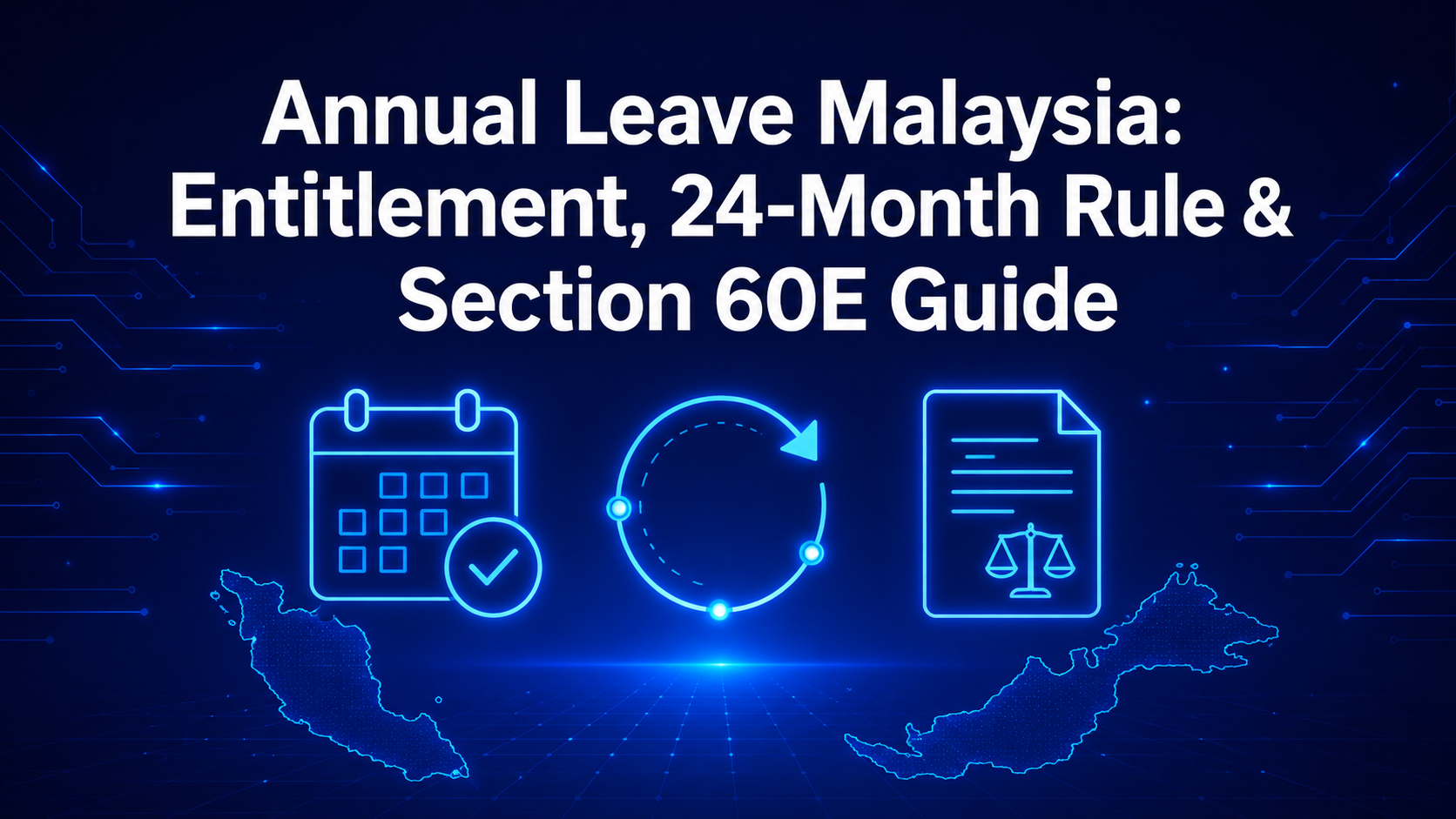
Annual Leave Malaysia: Entitlement, 24-Month Rule & Section 60E Guide
What Is Annual Leave in Malaysia?

Annual Leave Concept in Malaysia: Entitlement, Timeline & Carry-Forward Rule Under Section 60E
- Important !
The Employment Act 1955 applies to Peninsular Malaysia and has been extended to the Federal Territory of Labuan.
Annual Leave Entitlement in Malaysia
| Length of Service with Same Employer | Minimum Paid Annual Leave |
|---|---|
| Less than 2 years | 8 days per year |
| 2 years or more but less than 5 years | 12 days per year |
| 5 years or more | 16 days per year |
Example: How the 24-Month Annual Leave Concept Works
- Month 1: Employee starts work.
- Month 12: Employee completes 12 months of service.
- Month 13 to Month 24: Employee should use the annual leave entitlement.
- End of Month 24: Unused leave may cease to be entitled, subject to the Employment Act and company policy.

Option 1: Annual Leave After Completing 12 Months of Service
How it works:
The employee receives annual leave entitlement only after completing 12 months of continuous service.
Example:
If an employee joins the company and completes the first 12 months of service, the employee may then receive 8 days of annual leave. These 8 days should be taken within the next 12 months.
Things to take note:
- Easy for HR and payroll calculation.
- Annual leave is granted only after one full year of service.
- Less flexible for employees who need leave during their first year.
- The employee still has until the end of the 24th month to use the first year’s annual leave entitlement.
Suitable for: Companies that prefer a simple and straightforward annual leave policy.
Option 2: Annual Leave From Commencement of Employment
How it works:
The company allows employees to use annual leave from the start of employment, usually based on pro-rated entitlement.
Example:
If an employee is entitled to 8 days of annual leave per year, the company may calculate the leave monthly as the employee continues working.
Things to take note:
- Employees can apply for annual leave earlier.
- Leave is usually calculated on a pro-rated basis.
- This may improve staff satisfaction and flexibility.
- Employers should set clear rules for resignation, negative leave balance, and final salary adjustment.
Suitable for: Companies that want to offer a more employee-friendly leave policy.
Option 3: Annual Leave Upon Confirmation
How it works:
The company allows employees to start using annual leave only after they are confirmed.
Example:
If an employee is confirmed after 3 or 6 months, the company may allow the employee to apply for annual leave from the confirmation date onwards.
Things to take note:
- Common practice among Malaysian employers.
- Suitable for companies with a probation period.
- Easier to control leave usage during probation.
- The company must ensure the policy does not reduce the employee’s legal annual leave entitlement.
Suitable for: Companies that want to link annual leave usage with employee confirmation.
Can a Company Give Annual Leave Earlier?
Important Reminder for Employers
Even though unused annual leave may cease after the allowed period, employers should not treat leave forfeiture casually.
- Compliance Warning
The law states that the employer must grant annual leave and the employee must take it within the required period. If an employer fails to grant annual leave as required under Section 60E, it may be treated as an offence, and the employer may be ordered to pay the employee the ordinary rate of pay for the annual leave not granted.
Good HR practice includes:
- Informing employees of their annual leave balance;
- reminding employees before leave expires;
- stating the leave carry-forward rule clearly in the employee handbook;
- keeping approval records for every leave application;
- ensuring payroll calculation is accurate when an employee resigns.
What Happens If the Employee Resigns?

- overpayment;
- underpayment;
- employee disputes;
- payroll adjustment problems;
- compliance issues during inspection or audit.
Annual Leave and Sick Leave or Maternity Leave
Best Practice for Malaysian Employers
Your annual leave policy should explain:
- how unused leave is treated upon resignation;
- how employees should apply for leave;
- who approves leave applications.
- how annual leave is earned;
- whether leave is available from commencement, confirmation, or after 12 months;
- how pro-rated leave is calculated;
- how long unused leave can be carried forward;
- what happens when leave expires;
A clear policy protects both the employer and the employee. It also reduces misunderstanding because everyone follows the same rules.

Conclusion: Annual Leave Must Be Managed Properly
Frequently Asked Questions
How many days of annual leave must an employee get in Malaysia?
Under Section 60E of the Employment Act 1955, the minimum is 8 days, 12 days, or 16 days per year, depending on the employee’s length of service with the same employer.
Can annual leave be carried forward in Malaysia?
Can a company give annual leave before the employee completes 12 months?
Yes. A company may provide a more favourable policy, such as allowing annual leave from commencement or upon confirmation, as long as the policy does not reduce the employee’s statutory rights.
Is annual leave paid leave?
Yes. Annual leave is paid leave. The employer must pay the employee the ordinary rate of pay for every day of paid annual leave.
Should SMEs use payroll software to manage annual leave?
Yes. Payroll software helps reduce manual errors, track leave balances, manage approvals, and ensure final salary calculations are more accurate.
Need help managing payroll, leave entitlement, and HR compliance more efficiently?
Contact SL Software Solutions today to learn how AutoCount Payroll can help your business streamline payroll and leave management.