Malaysia e-Invoice SVDP: Eligibility, Versions and Submission Rules
Malaysia’s e-Invoice SVDP allows eligible taxpayers to correct past e-Invoice non-compliance until 31 December 2027. AutoCount Accounting V2 Rev 45 supports the designated SVDP document versions for voluntary disclosure submissions.
What Is the e-Invoice Special Voluntary Disclosure Programme?
Malaysia’s Inland Revenue Board, also known as LHDN or HASiL, introduced the e-Invoice Special Voluntary Disclosure Programme, or SVDP, to help taxpayers regularise past e-Invoice compliance issues.
The programme runs from 7 July 2026 until 31 December 2027.
It allows taxpayers to voluntarily disclose missing, incorrect or non-compliant e-Invoices relating to periods beginning from their mandatory e-Invoice implementation date.
The programme is intended to help businesses correct genuine mistakes and complete outstanding submissions in accordance with Malaysia’s current e-Invoice requirements.
- SVDP Period:
7 July 2026 to 31 December 2027
Businesses should begin reviewing their historical e-Invoice records early instead of waiting until the programme is close to ending.
The official guideline confirms that the programme began on 7 July 2026 and ends on 31 December 2027.
Who May Participate in the e-Invoice SVDP?
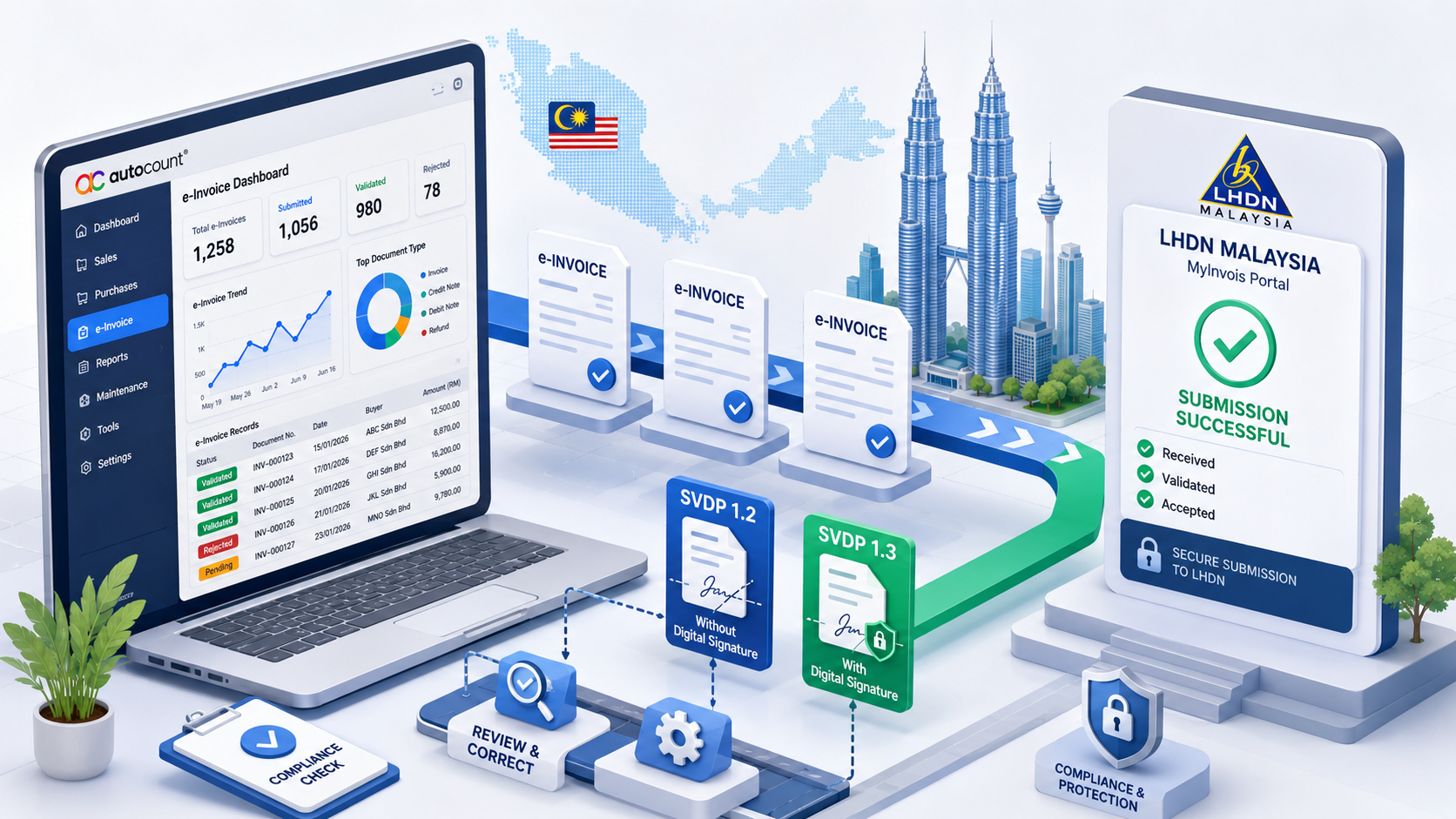
The programme may apply to taxpayers who identify e-Invoice compliance issues after their mandatory implementation date.
These may include taxpayers who:
- Failed to submit or accidentally missed certain e-Invoices
- Did not submit e-Invoices for a particular period
- Did not submit e-Invoices for certain transactions
- Submitted e-Invoices containing incorrect information
- Submitted documents that did not meet the required e-Invoice specifications
- Are currently undergoing an LHDN e-Invoice compliance review
- Have received notification that an e-Invoice compliance review will be conducted
Participation does not remove the taxpayer’s responsibility to ensure that every disclosure is accurate, complete and properly submitted.
These eligibility categories are listed in Section 17.1 of the official guideline.
What Protection Does the SVDP Provide?
Under the e-Invoice Specific Guideline Version 4.8, LHDN states that e-Invoice compliance reviews and enforcement actions, including penalties and prosecution, will not be undertaken in relation to e-Invoices properly disclosed under the SVDP.
- Important
Potential SVDP Protection
- Warning
The SVDP is not an automatic exemption from enforcement.
The SVDP should not be treated as an automatic exemption from enforcement.
The protection may not apply where:
- The submitted e-Invoices do not comply with the applicable legislation or e-Invoice guidelines.
- The voluntary disclosure involves fraud.
- The non-compliance resulted from negligence.
Taxpayers remain responsible for ensuring that every disclosure is accurate, complete and properly submitted.
SVDP 1.2 and SVDP 1.3 Document Versions
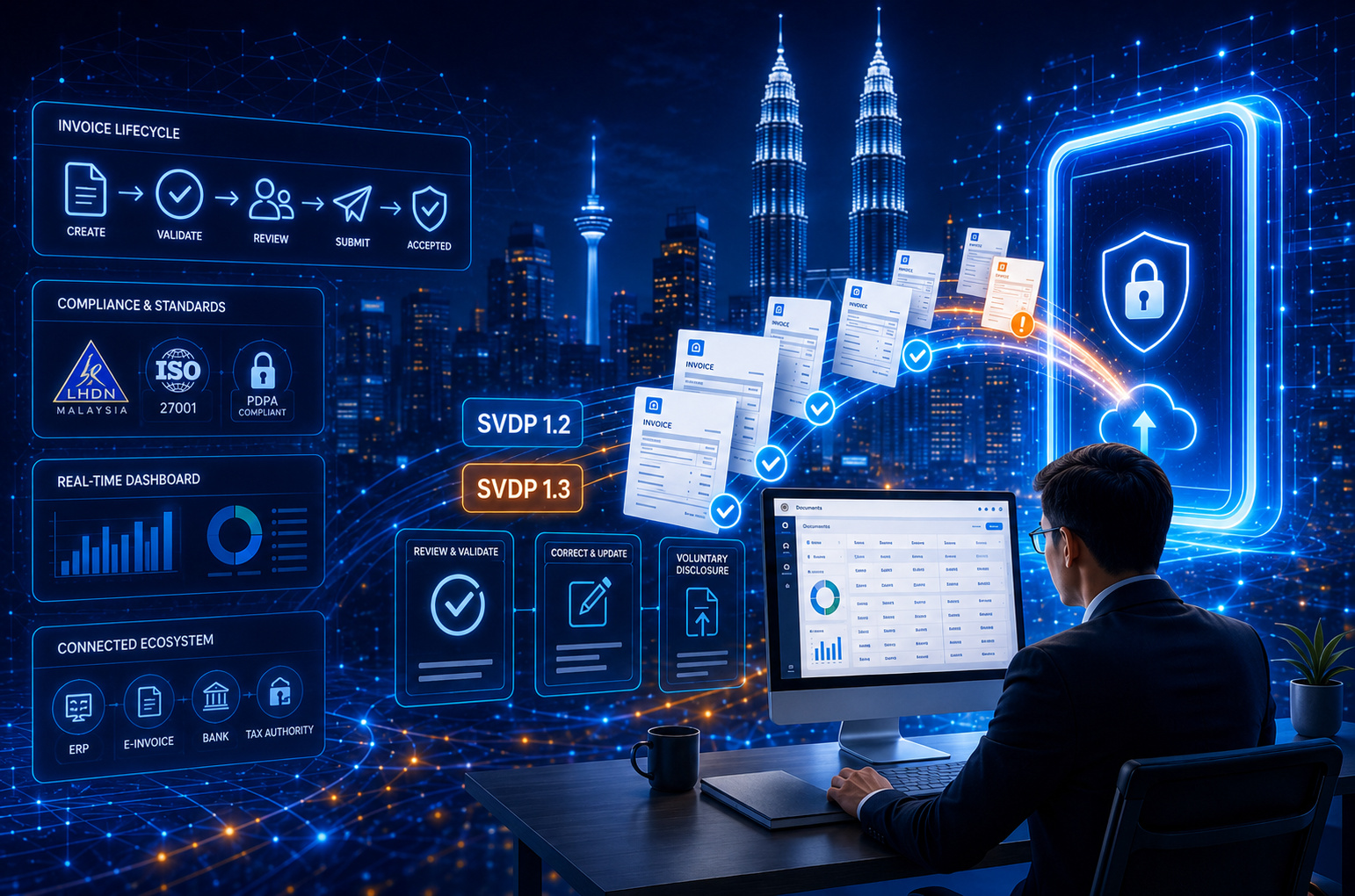
LHDN has designated two special document versions for e-Invoices submitted under the programme.
| Document Version | When It Is Used |
|---|---|
| SVDP 1.2 | For submissions without a digital signature. |
| SVDP 1.3 | For submissions with a digital signature. |
These versions are specifically intended for voluntary disclosures made under the e-Invoice SVDP.
They should not be selected for normal day-to-day e-Invoice submissions outside the programme.
The MyInvois SDK states that the SVDP document versions are available only during the voluntary disclosure period ending on 31 December 2027.
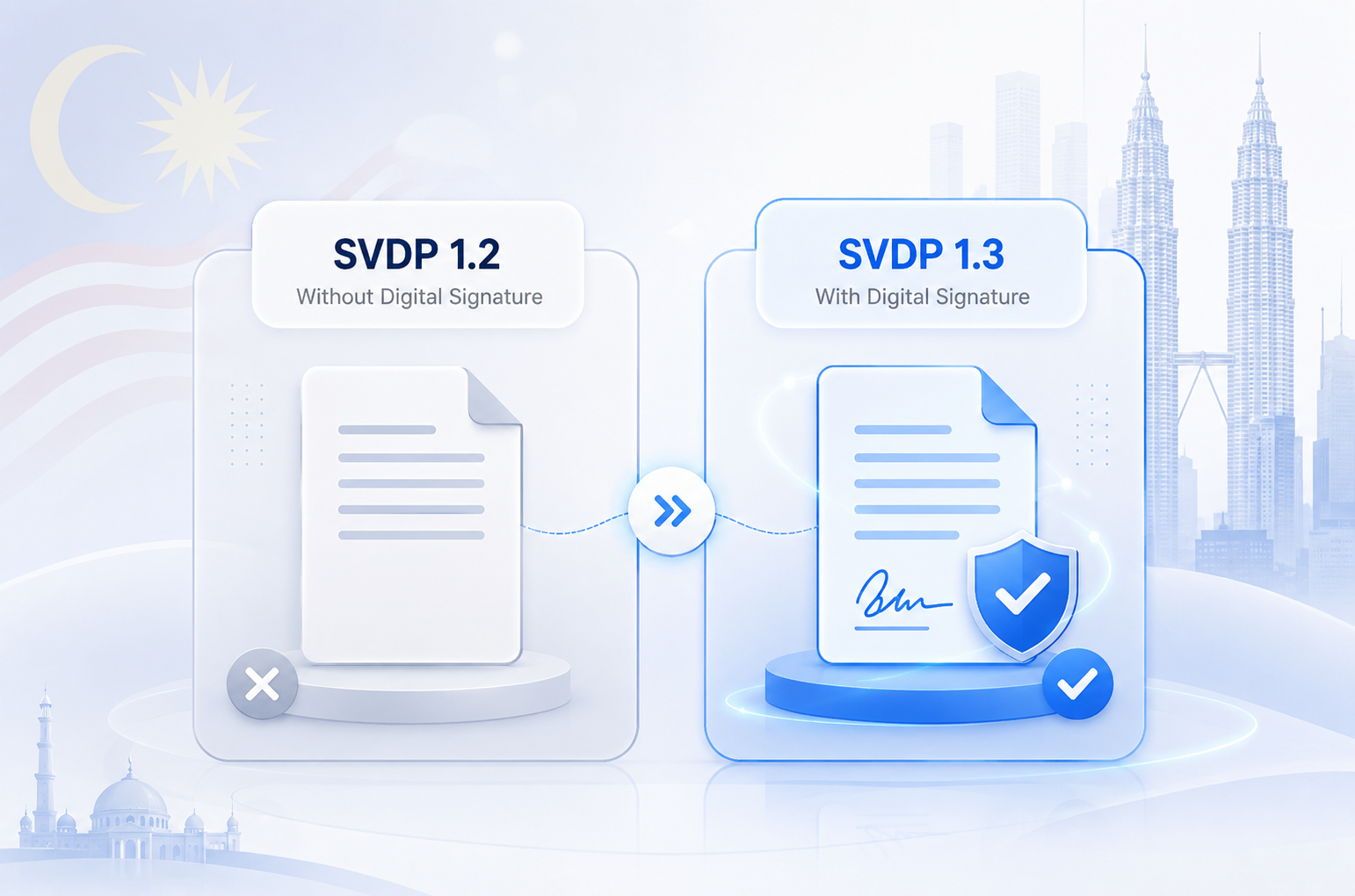
The official guideline defines SVDP 1.2 and 1.3, while the MyInvois SDK confirms their signature treatment and programme expiry date.
Consolidated e-Invoices Must Be Submitted by Transaction Month
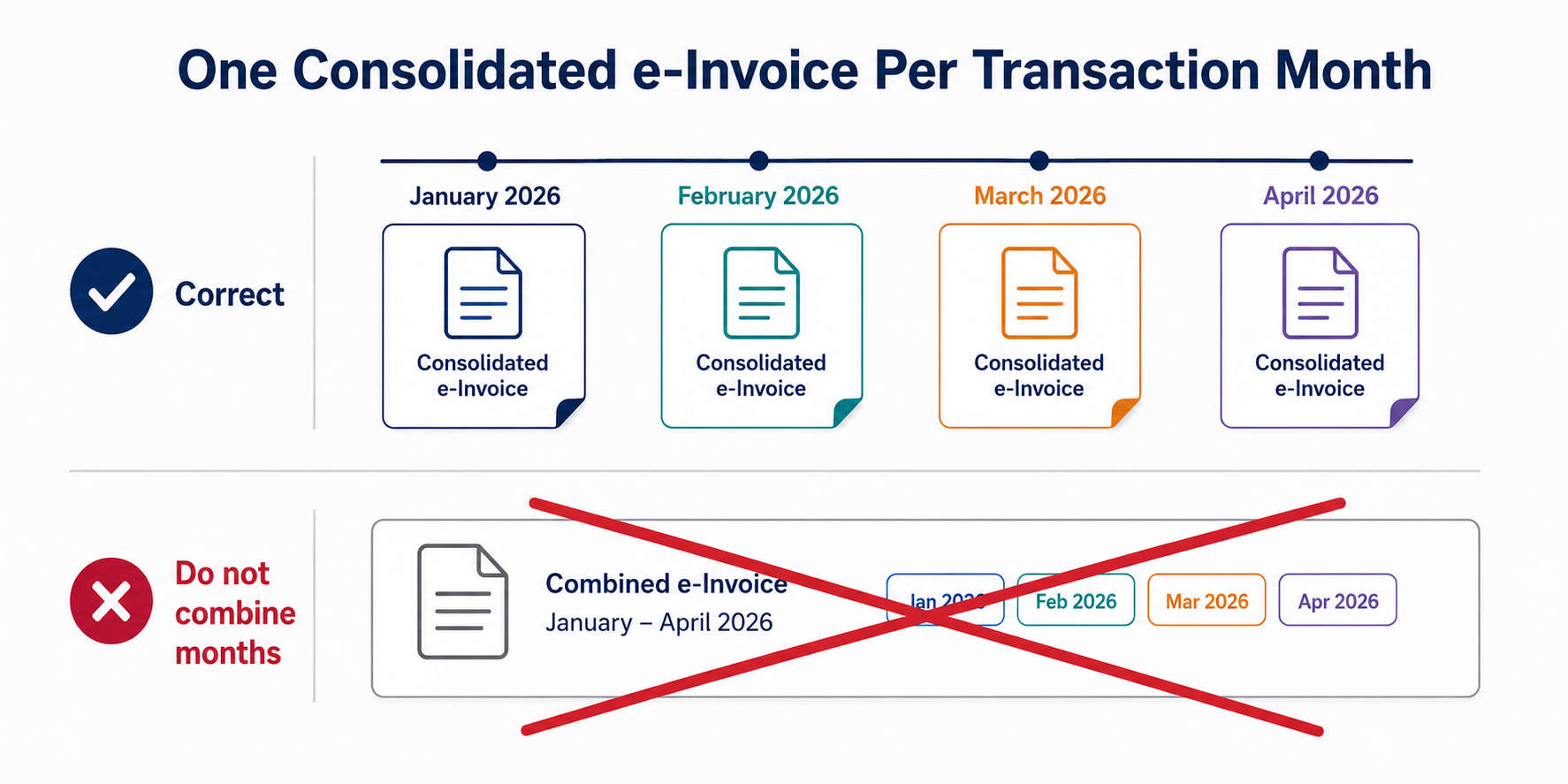
Businesses that failed to submit consolidated e-Invoices for several months cannot combine all the affected transactions into one lump-sum submission.
Each consolidated e-Invoice must be prepared according to the relevant month in which the transactions occurred.
- Example
A company failed to submit consolidated e-Invoices for January, February, March and April 2026.
The company must prepare the following:
| Transaction Month | Required Submission |
|---|---|
| January 2026 | One separate consolidated e-Invoice. |
| February 2026 | One separate consolidated e-Invoice. |
| March 2026 | One separate consolidated e-Invoice. |
| April 2026 | One separate consolidated e-Invoice. |
The company cannot combine transactions from all four months into one consolidated e-Invoice.
- Example
Each document submitted through the programme must use the appropriate SVDP 1.2 or SVDP 1.3 document version.
LHDN requires consolidated disclosures to follow the relevant transaction month. Transactions from several months cannot be combined into one lump-sum consolidated e-Invoice.
How to Treat Transactions Exceeding RM10,000
The e-Invoice Specific Guideline provides an SVDP example involving transactions below and above RM10,000.
In the example, a business has:
- Ten transactions below RM10,000 each
- One transaction valued at RM12,000
The transactions should be treated as follows:
| Transaction | Required Treatment |
|---|---|
| RM12,000 Transaction | Submit as an individual transactional e-Invoice. |
| Ten Transactions Below RM10,000 Each | May be included in a consolidated e-Invoice, provided the buyers did not request individual e-Invoices and the transactions qualify for consolidation. |
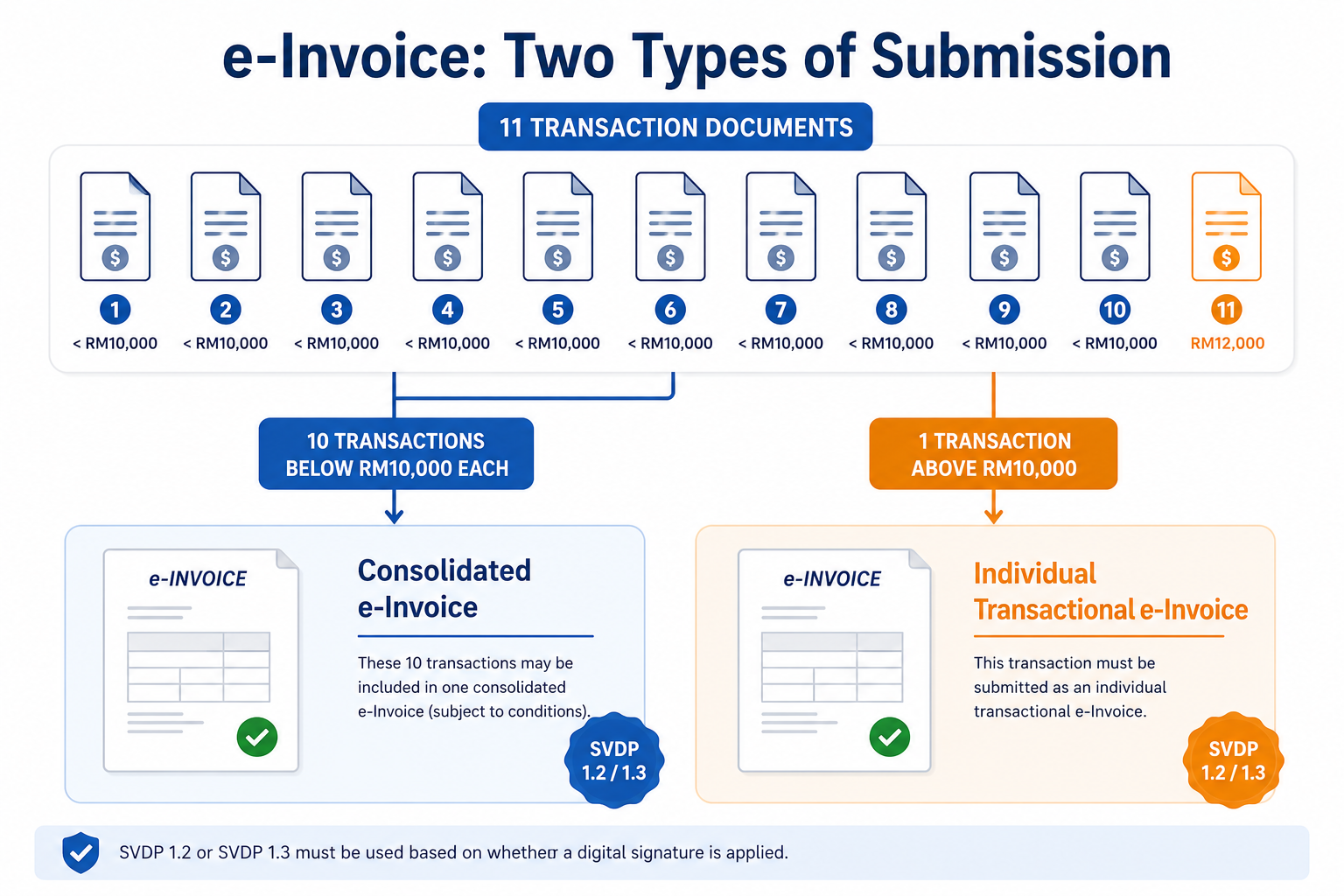
Both the individual transactional e-Invoice and the consolidated e-Invoice must use the appropriate SVDP document version.
The actual treatment of a transaction may also depend on the transaction type, buyer request and applicable consolidation rules. Businesses should avoid applying the RM10,000 example without first checking the facts of the affected transaction.
This treatment is based on Example 24 in the official guideline.
Can the SVDP Be Used for Self-Billed e-Invoices?
The programme may also be used to regularise missing self-billed e-Invoices.
Businesses must still follow the applicable self-billed e-Invoice requirements when preparing the voluntary disclosure.
Where the transactions occurred after the taxpayer’s interim relaxation period, individual transactional self-billed e-Invoices may be required unless the transactions fall within an exception provided by the e-Invoice Specific Guideline.
- Important
Self-billed documents submitted through the programme must use:
- SVDP 1.2 when submitted without a digital signature
- SVDP 1.3 when submitted with a digital signature
Businesses should review the nature and date of each self-billed transaction before determining the correct document treatment.
Example 25 in the guideline confirms that missing self-billed e-Invoices can be regularised through the programme, subject to the ordinary self-billing rules.
AutoCount V2 Rev 45 Supports e-Invoice SVDP
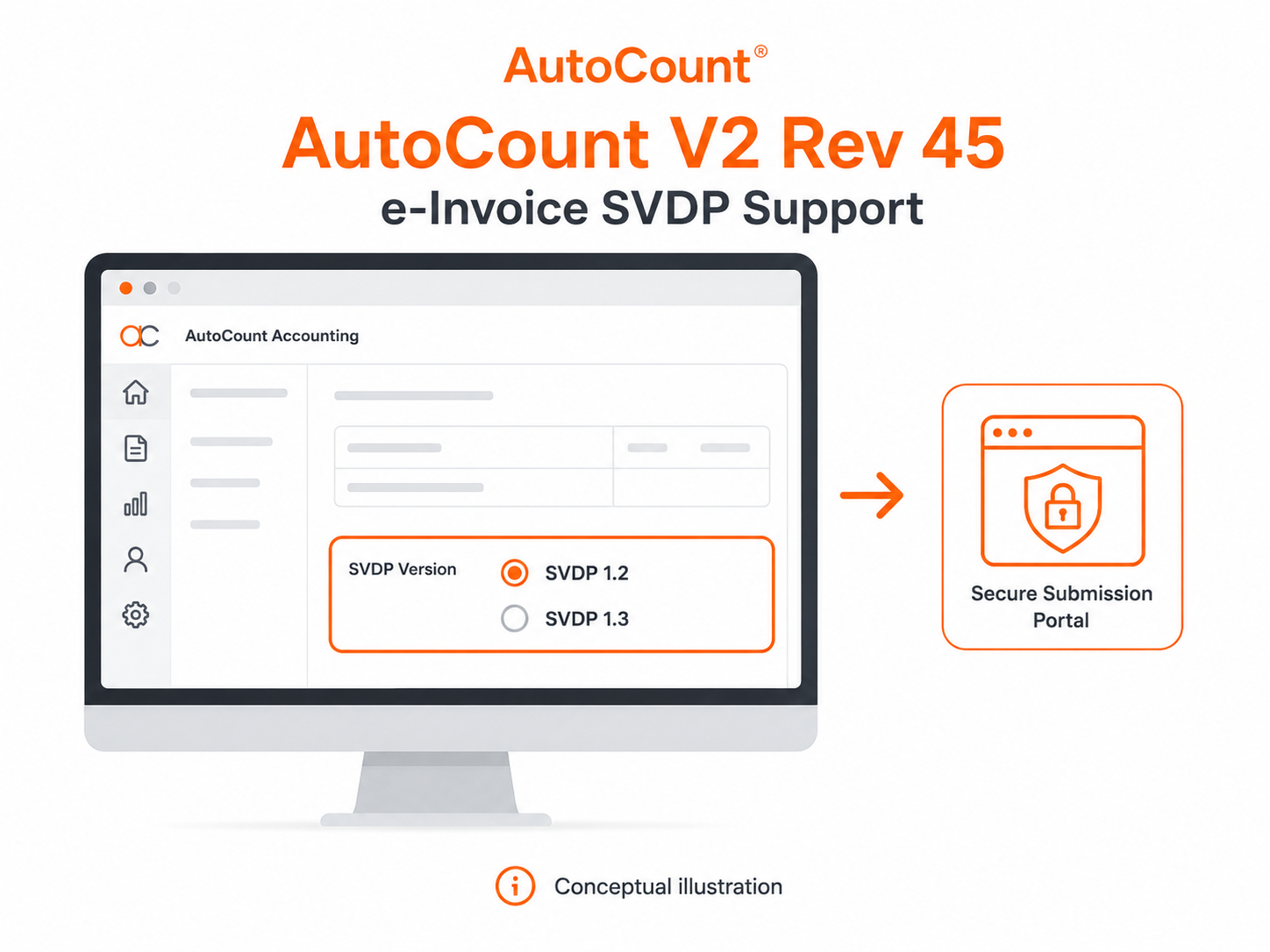
AutoCount Accounting V2 Rev 45 includes functions that support the preparation and submission of eligible transactional, consolidated and self-billed e-Invoices under the SVDP.
Businesses should update to a supported AutoCount revision before processing affected documents. However, the software version alone does not determine whether a transaction qualifies for SVDP. Businesses must still review the transaction date, document type, transaction value, buyer request and applicable LHDN requirements.
For the complete AutoCount setup, submission and tracking process, read our AutoCount Rev 45 e-Invoice SVDP Setup Guide.
SVDP Preparation Checklist for Businesses
The Admin Console may provide configuration areas such as:
-
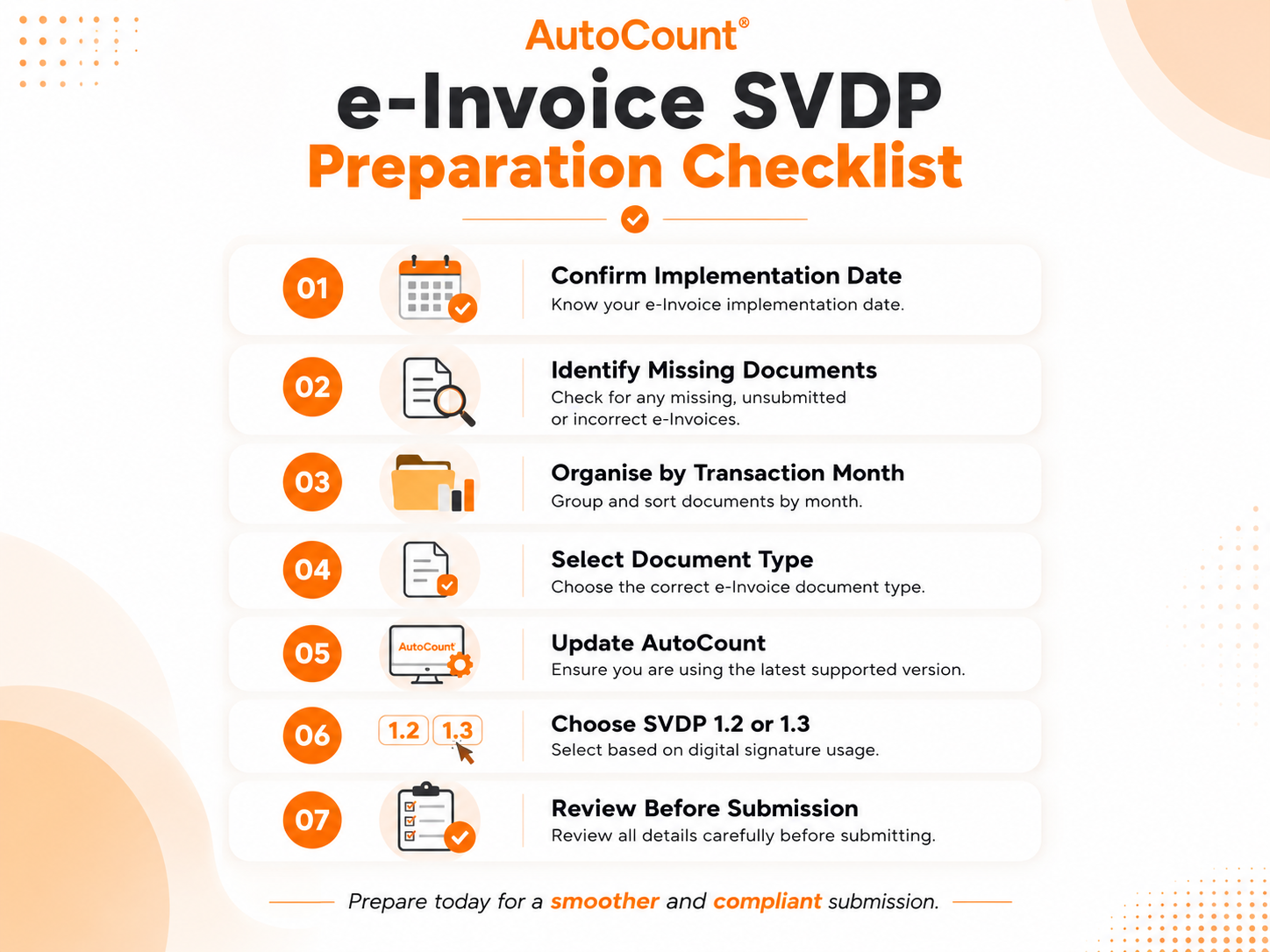
Confirm the mandatory implementation date
Determine when the company became legally required to implement e-Invoice. -
Identify the affected documents
Find missing, rejected, incorrectly submitted or non-compliant e-Invoices. -
Review the affected periods
Organise the transactions according to their original transaction month. -
Determine the correct document type
Decide whether each transaction requires a transactional, consolidated or self-billed e-Invoice. -
Update AutoCount Accounting
Ensure the system is running V2 Rev 45 or another revision officially supporting the SVDP versions.
-
Select the correct SVDP version
Use SVDP 1.2 for submissions without a digital signature or SVDP 1.3 for submissions with a digital signature. -
Check transaction values and buyer requests
Determine whether transactions must be individually submitted or may qualify for consolidation. -
Review the information before submission
Confirm that all buyer, supplier, transaction and document information is complete and accurate. -
Retain supporting records
Keep transaction documents, review working papers, submission results and related correspondence.
Businesses with a high volume of historical transactions should conduct a structured review before submitting documents. Incorrect or incomplete disclosures may fall outside the protection provided by the programme.
Need Help With AutoCount e-Invoice SVDP?
The e-Invoice SVDP gives eligible businesses an opportunity to correct previous e-Invoice compliance issues before the programme ends on 31 December 2027.
However, businesses must still ensure that each disclosure is accurate and submitted using the correct transaction type, transaction month and SVDP document version.
SL Software Solutions Sdn Bhd, an AutoCount authorised dealer, can assist businesses with:
- Updating AutoCount Accounting V2
- Reviewing AutoCount e-Invoice settings
- Understanding the SVDP submission workflow
- Identifying the appropriate e-Invoice document type
- Preparing consolidated and self-billed e-Invoices
- Providing system training and implementation support
Contact our team to check whether your current AutoCount version is ready for e-Invoice SVDP submissions.
- Disclaimer:
This article provides general information about Malaysia’s e-Invoice SVDP and AutoCount system support. The correct treatment may vary depending on each transaction. Businesses should refer to the latest LHDN guidelines or obtain professional tax advice where necessary.
Frequently Asked Questions
When does the Malaysia e-Invoice SVDP end?
The programme runs from 7 July 2026 until 31 December 2027. Businesses should complete their transaction review and prepare the affected e-Invoices before the closing date.
Can several months of missing consolidated e-Invoices be combined?
No. Consolidated e-Invoices must be prepared according to the relevant transaction month. For example, four affected months generally require four separate consolidated e-Invoices.
What is the difference between SVDP 1.2 and SVDP 1.3?
SVDP 1.2 is used for submissions without a digital signature. SVDP 1.3 is used for submissions with a digital signature. Both versions are specifically designated for the voluntary disclosure programme.
Can missing self-billed e-Invoices be submitted under the SVDP?
Yes, the programme may be used to regularise missing self-billed e-Invoices. However, businesses must still follow the applicable self-billed e-Invoice requirements and determine whether individual transactional documents are required.
Does AutoCount automatically determine whether a transaction qualifies for SVDP protection?
AutoCount can support the preparation and submission of the required SVDP document versions, but the business remains responsible for determining the correct transaction treatment and ensuring that all submitted information is accurate and compliant.
Need Help Preparing Your AutoCount e-Invoice SVDP Submission?
Contact SL Software Solutions to check your AutoCount version, review your e-Invoice settings and understand the correct SVDP document type before submission.