
-
AutoCount Accounting Features
-
- Approval Workflow
- Audit Trail
- Auto Save in Draft Folder
- AutoCount Contra Account
- AutoCount Feature Stock Take
- AutoCount License Setting Guide
- Column Chooser
- Deposit Tracking & Management
- Documents Numbering Format
- Full Transfer and Partial Transfer
- Import Data to AutoCount Accounting Using Excel
- Informative Charts and Analytical Data
- Layout Customization
- Multi Pricing
- Sales and Services Tax
- Schedule Backup
- Search Lookup Edit
- View Documents Flow
- Show Remaining (3) Collapse
-
AutoCount Cloud Accounting
-
AutoCount E-Invoice
- AutoCount E-Invoicing Tutorial
- E-Invoice Guide and Preparation for AutoCount Users
- Employee Handbook Template for E-Invoicing
- How E-Invoice Works in AutoCount Accounting?
- How to Enable and Submit SVDP e-Invoices in AutoCount 2.0
- How to Use AutoCount Accounting for LHDN e-Invoice
- What is E-Invoicing?
-
AutoCount Payroll & HRMS
-
- Coming soon
-
- Coming soon
-
AutoCount Modules
-
- Activity Stream
- Advanced Financial Report
- Advanced Item
- Advanced Multi-UOM
- Advanced Quotation Module
- AutoCount Bonus Point Module User Guide
- AutoCount Scripting Module User Guide
- AutoCount Service Management Plugin User Guide
- AutoCount SST Hidden Functions
- AutoCount SST Submission - Service Tax
- Basic Multi-UOM
- Budget Module
- Consignment
- Filter By Salesman
- FOC Quantity
- Formula
- Item Batch
- Item Package
- Landing Cost
- Multi-Currency
- Multi-Dimensional Analysis
- Multi-Location
- Project Account
- Recurrence
- Remote Credit Control Module
- Stock Assembly
- User Defined Fields (UDF)
- Show Remaining (12) Collapse
-
AutoCount Plugins
-
- AutoCount Car Tint Film Plugin
- AutoCount Credit Memo Plugin User Guide
- AutoCount Easy Recurrence Plugin
- AutoCount Lock Price Plugin
- AutoCount Pick List Plugin User Guide
- AutoCount Production order
- AutoCount Progressive Billing
- Batch Update Unit Price Plugin
- DMS Import Plugin
- Fixed Assets Management
- Goldsmith
- TD Ordering Mobile Apps
- TD Stock Mobile Apps
- Universal Import Plugin
-
- AutoCount Advance Aging Format Plugin
- AutoCount Advance Deposit Plugin
- AutoCount Advanced Credit Term Plugin User Guide
- AutoCount Advanced Stock Assembly Plugin User Guide
- AutoCount Agent Validation Plugin User Guide
- AutoCount AutoBank Reconciliation Plugin User Guide
- AutoCount Barcode Generator Plugin User Guide
- AutoCount Batch Transfer SO DO Plugin
- AutoCount Bill Remark Plugin User Guide
- AutoCount Cage Management Plugin User Guide
- AutoCount Centralized Kitchen Management Plugin
- AutoCount Daily Collection Summary Plugin User Guide
- AutoCount Easy Batch Number Entry Plugin User Guide
- AutoCount Easy Deposit Plugin User Guide
- AutoCount Easy Knock Off Plugin
- AutoCount Easy Payment Plugin User Guide
- AutoCount Easy Photo 2.0 User Guide
- AutoCount Email & WhatsApp Plugin User Guide
- AutoCount Event Management System Plugin User Guide
- AutoCount Fruit Basket Plugin Guide
- AutoCount GridToExcel Plugin
- AutoCount Historical Outstanding DO Listing Plugin
- AutoCount IC Checker Plugin
- AutoCount Integrator Plugin
- AutoCount InterCompany Billing Plugin
- AutoCount Item Visibility Control Plugin User Guide
- AutoCount Migrator Plugin
- AutoCount MRP Order Plugin
- AutoCount Multi Company Knock Off Plugin
- AutoCount Optical Plugin
- AutoCount Pain Tracker Plugin User Guide
- AutoCount Payment Request Plugin
- AutoCount Procurement Planning Plugin User Guide
- AutoCount Project Department Visibility Control Plugin
- AutoCount Recurrence Late Interest Plugin
- AutoCount Recurring Invoice Plugin User Guide
- AutoCount Referral Management Plugin User Guide
- AutoCount Rental Management
- AutoCount RMA Plugin
- AutoCount Sales Commission Plugin
- AutoCount Scale Barcode Plugin User Guide
- AutoCount Service Contract Plugin User Guide
- AutoCount Shipment Plugin User Guide
- AutoCount Smart Analysis Plugin User Guide
- AutoCount Stock Availability Report Plugin
- AutoCount Timber Log Plugin User Guide
- AutoCount To-Do List Plugin User Guide
- AutoCount Tour Plugin User Guide
- AutoCount Vege Basket Plugin User Guide
- AutoCount Vehicle Master Plugin User Guide
- AutoCount Vehicle Plugin
- AutoCount Warranty 2.0 Plugin User Guide
- Batch Transfer SODO Plugin
- Intercompany Billing Plugin User Guide
- Lead Management 2.0 Plugin
- SL AutoCount API
- Show Remaining (41) Collapse
-
-
Form Template
-
Report Template
-
- Advance Quotation
- Cash Sale
- Consignment
- Consignment Movement
- Credit Note
- Debit Note
- Delivery Order
- FOC Quantity Analysis By Document Report
- Invoice
- Item Package Sales Report
- Monthly Sales Analysis
- Outstanding Sales Order Listing
- Profit And Loss Of Documents
- Quotation
- Sales Agent Contribution Report
- Sales Order
- Top/Bottom Sales Ranking
- Show Remaining (2) Collapse
-
- Available Stock Status Report
- Expired Item Batch Listing
- Inventory Physical Worksheet
- Stock Adjustment
- Stock Aging Report
- Stock Assembly
- Stock Assembly Order
- Stock Balance By Location
- Stock Balance Report
- Stock Card Report
- Stock Disassembly
- Stock Issue
- Stock Item Profit Margin
- Stock Movement Report
- Stock Receive
- Stock Take
- Stock Transfer
- Stock Write Off
- Show Remaining (3) Collapse
-
B2B ORDERING
-
AutoCount AI Agent
-
AutoCount FAQ & Troubleshooting
-
AutoCount F&B
-
- How to Accept or Reject QR Orders in AutoCount F&B POS
- How to Connect AutoCount POS Backend to QR Ordering Using an API Key
- How to Create a Restaurant in AutoCount QR Ordering Backend
- How to Customize AutoCount QR Ordering Customer View and Operating Hours
- How to Print and Test AutoCount F&B Table QR Codes
- How to Publish Menu Items to AutoCount F&B QR Ordering
- How to Set Up AutoCount F&B QR Ordering: Complete Guide
- How to Set Up Table QR Codes in AutoCount F&B
-
-
AutoCount Unicart Integration
- How Customer, Supplier and Order Field Mapping Works
- How Does a SiteGiant iSKU Map to an AutoCount Item Code?
- How Does the System Check Duplicate iSKU Mapping?
- How Is the Stock Sync Quantity Calculated?
- How Shipping, Discounts, Vouchers and Marketplace Charges Post to AutoCount?
- How Should a New AutoCount Item and SiteGiant iSKU Be Created?
- How SiteGiant Members and Bonus Points Sync with AutoCount POS
- How SiteGiant Orders Sync to AutoCount: Manual or Automatic
- How SiteGiant Purchase Flow Posts to AutoCount GRN
- How to Auto Sync AutoCount Price & Cost to SiteGiant Inventory
- How to Choose the Stock Master in SiteGiant and AutoCount
- How to Connect SiteGiant ERP to AutoCount and Confirm the Connection
- How to Handle Cancelled, Returned or Refunded Online Orders?
- How to Handle Fulfilled by Shopee Stock in AutoCount
- How to Handle SiteGiant Bundle / KIT Items
- How to Map Different UOMs for the Same Item?
- How to Reconcile Marketplace Settlements Using Bulk Knock Off
- How to Set the Posting Rules for Each Sales Channel
- How to Sync Stock from AutoCount to SiteGiant: Manual or Automatic
- Show Remaining (4) Collapse
AutoCount Lock Price Plugin User Guide
What is AutoCount Lock Price Plugin?
AutoCount Lock Price Plugin helps businesses protect selling prices by controlling which users can view or edit prices in AutoCount Accounting. It is useful for companies that want to prevent unauthorized discounts, hide sensitive price information, lock invoice pricing, and enforce consistent pricing policies across sales documents and item maintenance.
AutoCount Lock Price Plugin Video Guide
- AutoCount Lock Price Plugin (EN)
Lock Price Plugin Setup
Integration & Price Lock Setup
- AutoCount Lock Price Plugin (CN)
锁定价格插件设置
集成与价格锁设置
Why Use AutoCount Lock Price Plugin?
Using this plugin helps protect your profit margins by preventing staff from applying unauthorized discounts. It also improves pricing consistency across all documents and sales channels. Additionally, it enhances data confidentiality by hiding prices from users who don’t have permission to see them. By controlling who can change prices, the plugin supports strong audit trails — price changes only happen when properly authorized.
Who Should Use AutoCount Lock Price Plugin?
Businesses with multiple users and sales teams
Organizations where several staff members access sales and pricing screens can benefit from the plugin by preventing pricing errors and unauthorized edits, ensuring pricing integrity across the system.
Companies with strict pricing policies
Businesses that need to enforce consistent pricing — such as those with discount rules, special pricing tiers, or regulated price lists — can rely on the plugin to keep pricing accurate and compliant.
Managers and accounting teams overseeing price control
Finance and operations teams can use the plugin to centralize control of price edits, reducing manual oversight and improving audit accountability throughout the pricing process.
Key Features of AutoCount Lock Price Plugin
Role-Based Permissions
Set which user roles can view and edit prices.
Dynamic Data Masking
Hides prices for users without permission.
System-Wide Coverage
Applies across invoices, quotations, and stock item screens.
Dual-Layer Security
Separates “view price” and “edit price” rights.
Seamless Integration
Works within the native AutoCount user interface.
How to Set Up AutoCount Lock Price Plugin
1. Assign Access Rights
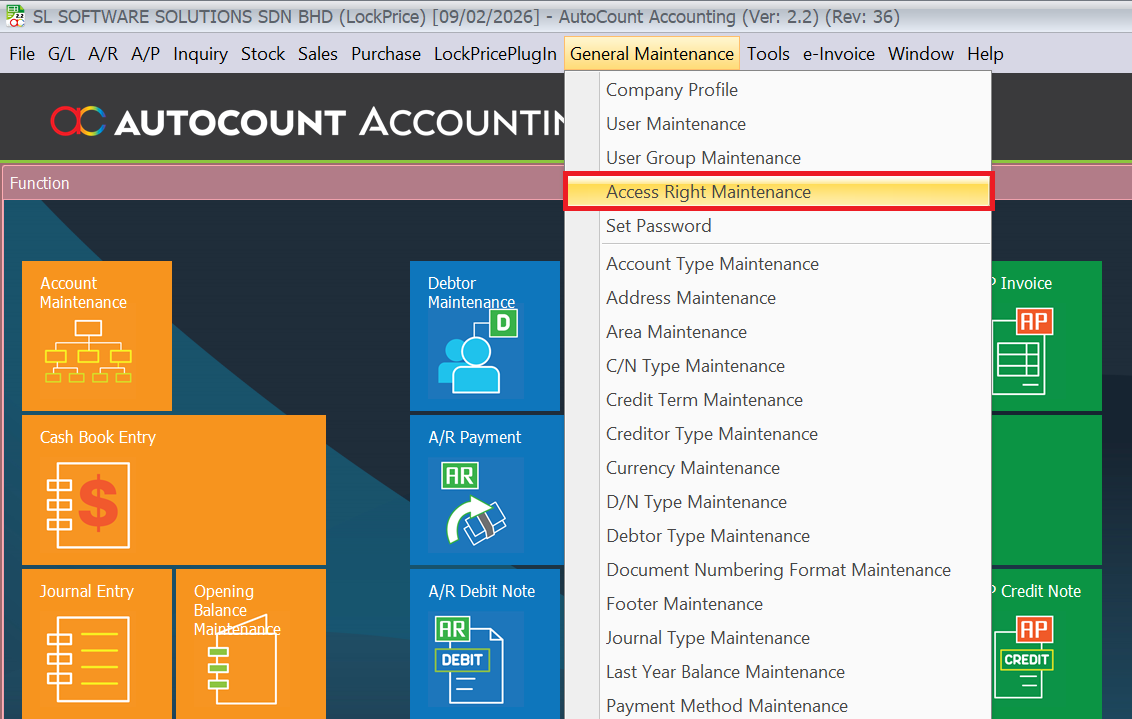
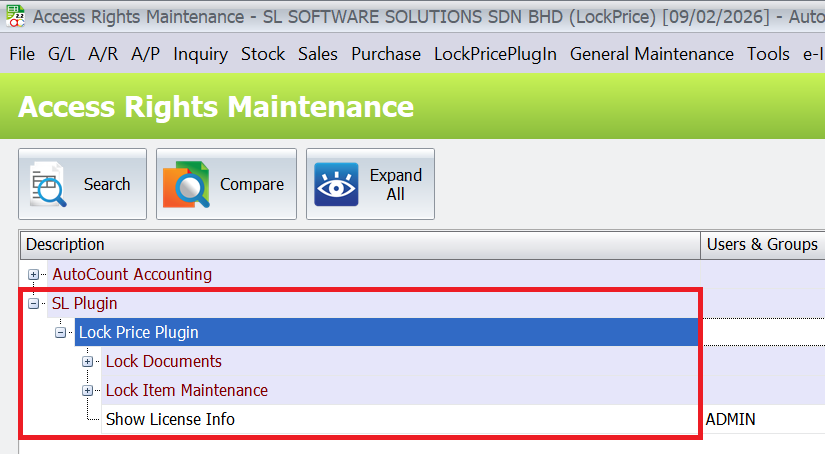
- Assign Access Rights: Go to General Maintenance > Access Right Maintenance in AutoCount Accounting. Expand the SL Plug-In section and select Lock Price Plugin. Click on it and choose Set Group Access Rights.
- Configure User Group Permissions: In the pop-up window, select the relevant user group (e.g., Admin). Change the permission from Don’t Change to Add, then click OK. Confirm by clicking Yes to apply the rights to all sub-commands.

How AutoCount Lock Price Plugin Works
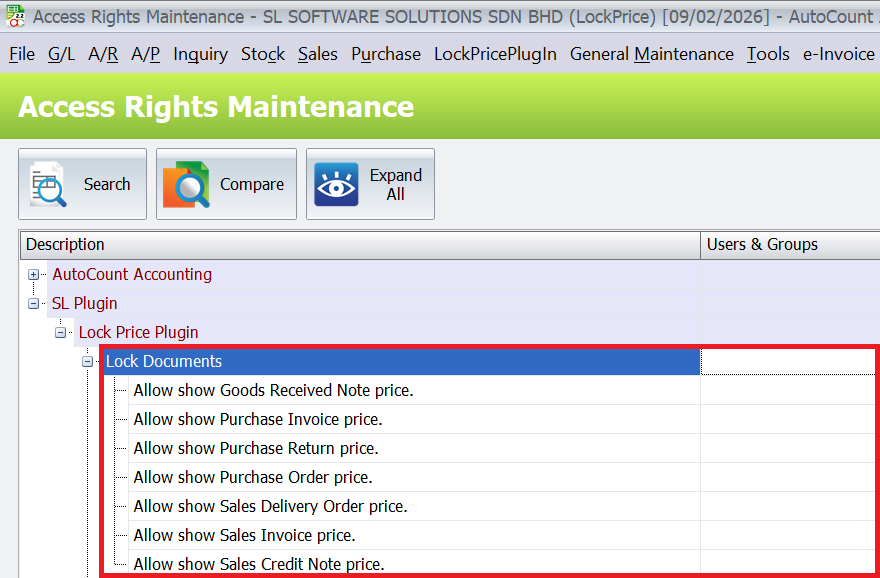
1. Lock Document Editing
- Open a Document for Editing: When a user opens a document (e.g., Invoice) in edit mode, AutoCount automatically locks it.
- Prevent Simultaneous Edits: Other users can still view the document, but they cannot modify it until the first user exits.
- Maintain Data Accuracy: This prevents multiple users from changing pricing details at the same time, ensuring data consistency in a multi-user environment.
2. Lock Item Maintenance Prices
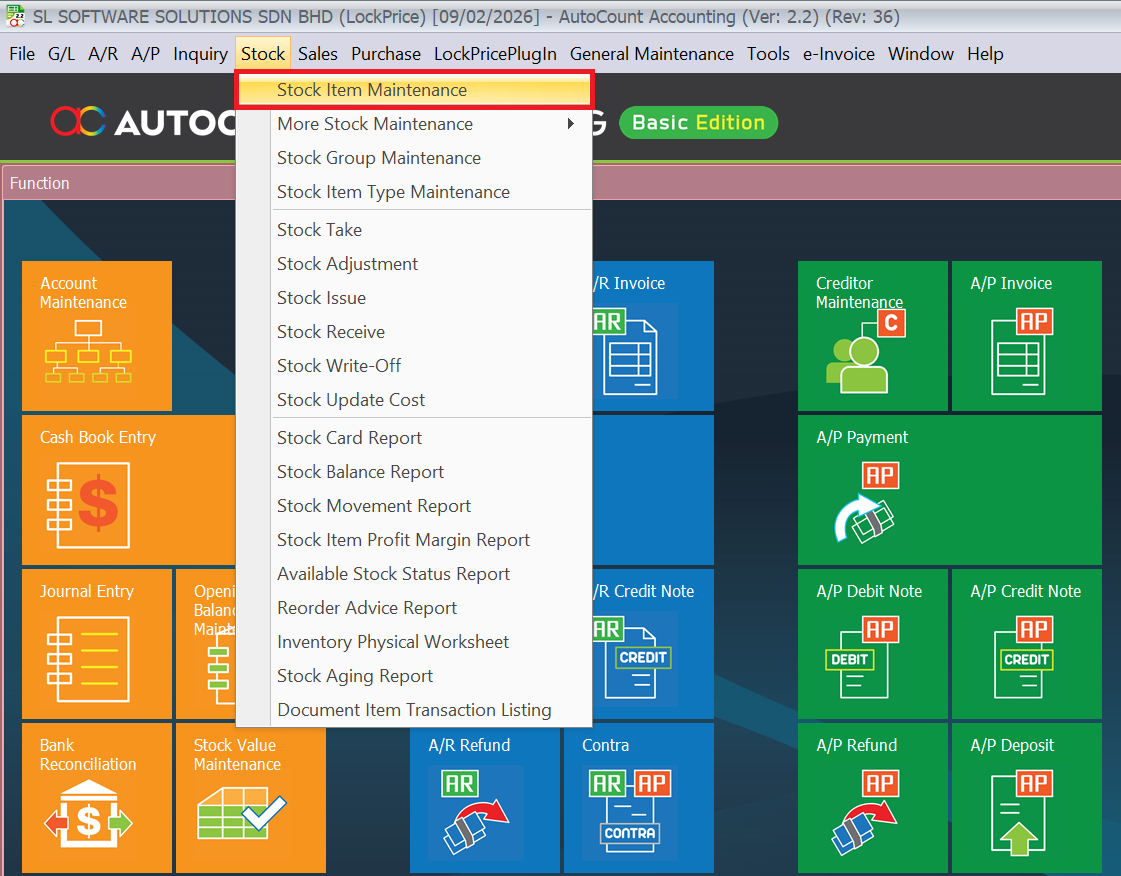
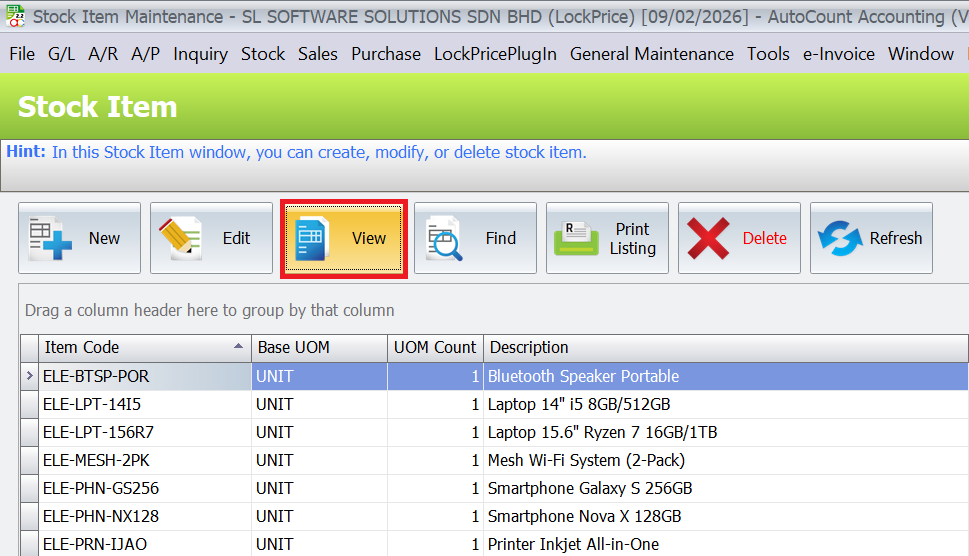
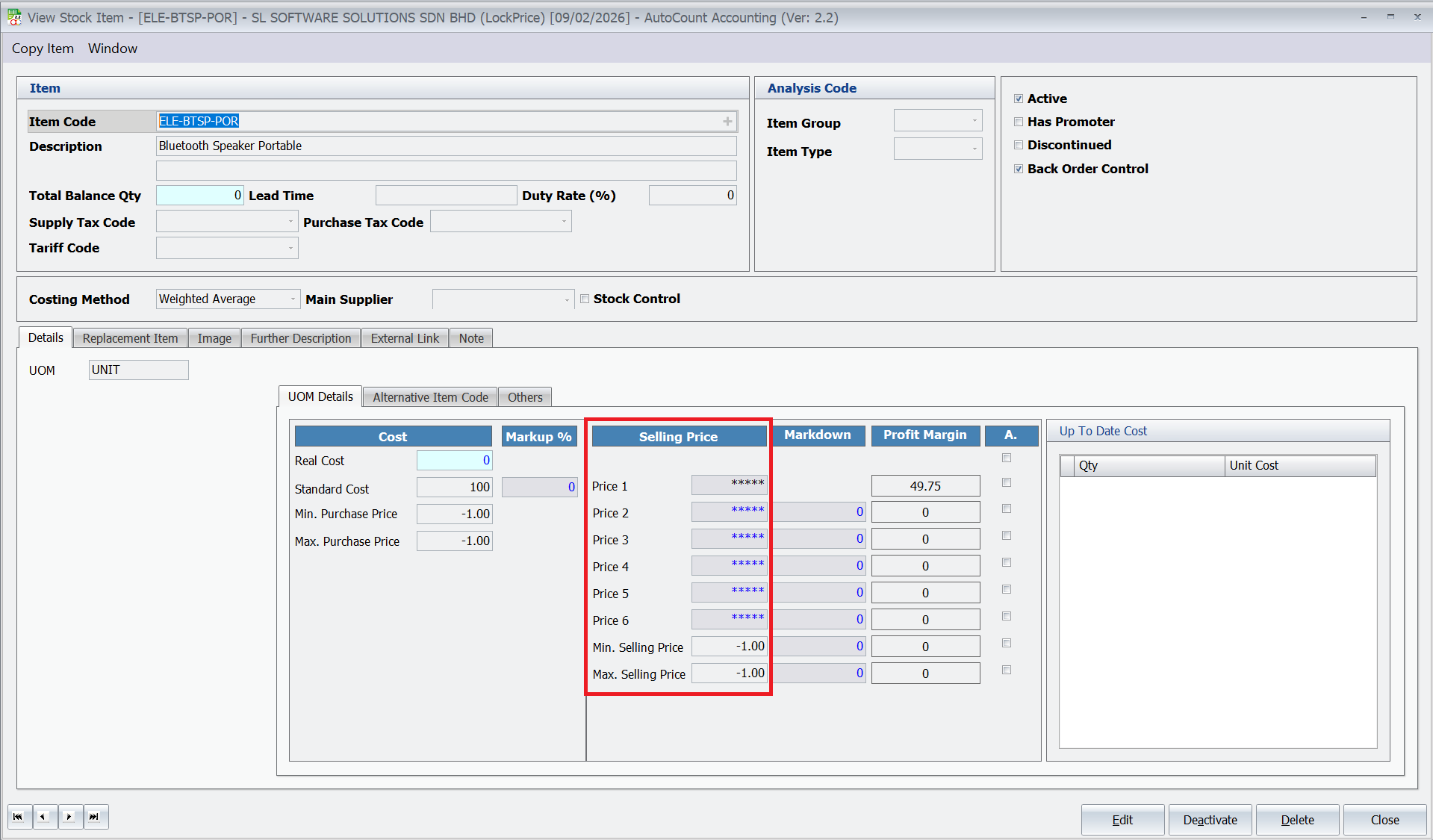
- Verify Price Lock in Item Maintenance: Go to Stock > Item Maintenance, select an item configured for price locking, and click View.
- Check Selling Price Field: In the item details screen, the Selling Price field will appear hashed (disabled) and cannot be edited.
- Confirm Protection: This ensures users cannot directly modify item prices in Item Maintenance.
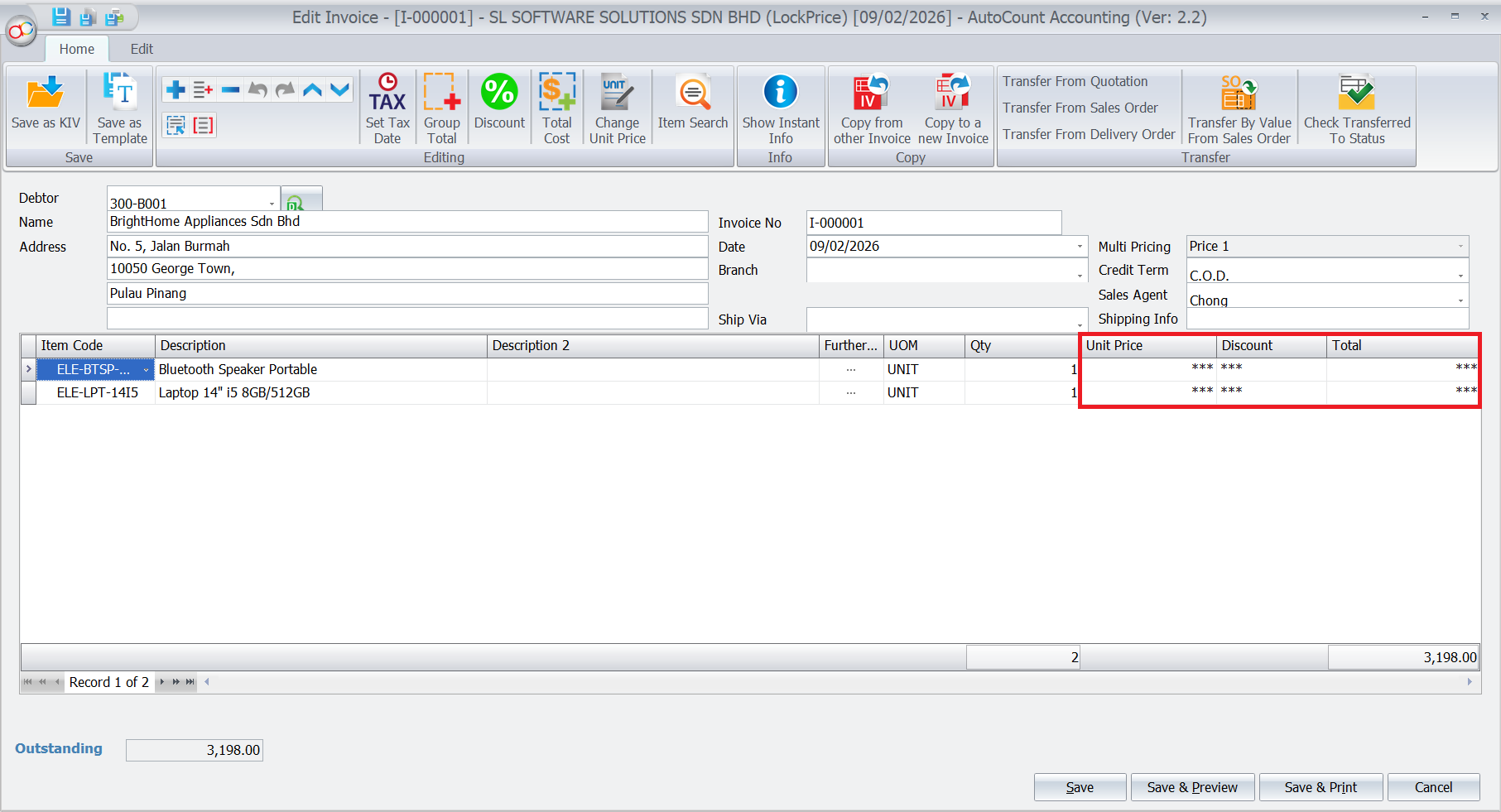
3. Lock Prices in Invoices
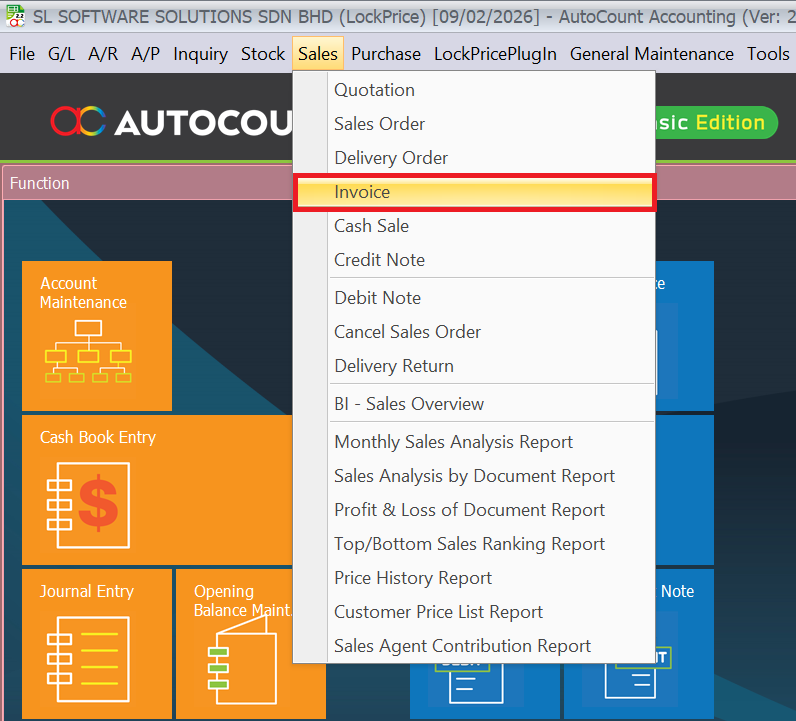
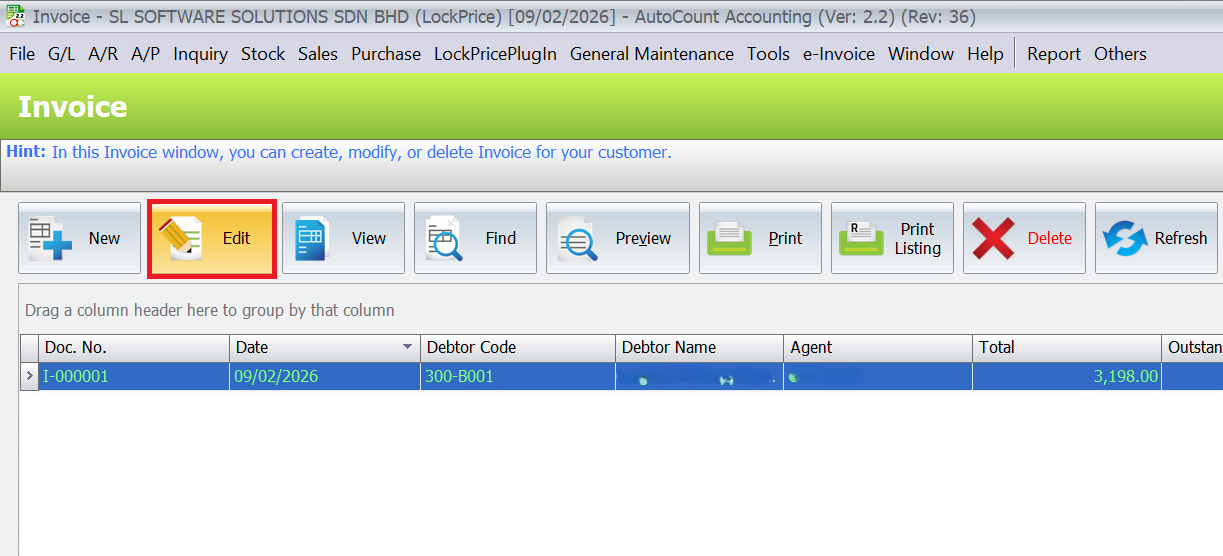
- Open an Invoice: Go to Sales > Invoice, select any invoice, and click Edit.
- Observe Disabled Fields: The Unit Price, Discount, and Total fields will appear hashed (disabled) if the plugin is active.
- Ensure Pricing Consistency: This confirms the Lock Price Plugin is enforcing price protection during document editing.
Benefits of AutoCount Lock Price Plugin
Increased Efficiency
Price edits follow your policies, saving time correcting mistakes.
Accuracy
Stops accidental price changes that affect margins.
Time-Saving
Eliminates disputes about price adjustments by unauthorized users.
Flexibility
Permissions can be tailored per user group.
Seamless Integration
Works smoothly inside AutoCount sales and inventory modules.
Best Practices for Using AutoCount Lock Price Plugin
Assign price access only to authorized users
Give price editing rights only to managers, supervisors, or approved accounting users.
Train staff on price lock rules
Teach staff the deposit workflow so entries are accurate every time.
Review pricing permissions regularly
Check user access rights from time to time, especially when staff change roles or new users are added.
Conclusion
The AutoCount Lock Price Plugin for AutoCount Accounting gives your business control, security, and consistency over price data — an essential aspect of financial accuracy. It protects profits, enforces pricing policies, and ensures pricing is only editable by authorized users within your AutoCount system.
Frequently Asked Questions
What does AutoCount Lock Price Plugin do?
The Lock Price Plugin prevents users from changing the Unit Price of items during document entry. This ensures that transactions follow the predefined item pricing set in AutoCount.
Can certain users still edit item prices?
Yes. Price editing can still be controlled using user access rights or plugin configuration. Administrators can decide whether price changes are allowed for specific users or documents.
Which documents can use AutoCount Lock Price Plugin?
The Lock Price Plugin typically applies to sales documents such as Sales Invoice, Sales Order, Delivery Order, and Cash Sale. The available document types depend on how the plugin is configured.
What happens if a user tries to change a locked price?
The system will block the edit, and the Unit Price will remain unchanged. Users must follow the item’s predefined selling price.
Can AutoCount Lock Price Plugin hide prices from selected users?
Interested in Getting AutoCount for your Business?
Contact our sales team today to explore pricing options and get started with the perfect solution for you.