
-
AutoCount Accounting Features
-
- Approval Workflow
- Audit Trail
- Auto Save in Draft Folder
- AutoCount Contra Account
- AutoCount License Setting Guide
- Deposit Tracking & Management
- Documents Numbering Format
- Full Transfer and Partial Transfer
- Import Data to AutoCount Accounting Using Excel
- Informative Charts and Analytical Data
- Layout Customization
- Multi Pricing
- Sales and Services Tax
- Schedule Backup
- Search Lookup Edit
- View Documents Flow
- AutoCount Feature Stock Take
- Column Chooser
- Show Remaining (3) Collapse
-
AutoCount Cloud Accounting
-
AutoCount E-Invoice
-
AutoCount HRMS User Guide
-
AutoCount Modules
-
- Activity Stream
- Advanced Financial Report
- Advanced Item
- Advanced Multi-UOM
- Advanced Quotation Module
- Basic Multi-UOM
- Budget Module
- Consignment
- Filter By Salesman
- FOC Quantity
- Formula
- Item Batch
- Item Package
- Landing Cost
- Multi-Currency
- Multi-Dimensional Analysis
- Multi-Location
- Project Account
- Recurrence
- Remote Credit Control Module
- Stock Assembly
- User Defined Fields (UDF)
- AutoCount SST Hidden Functions
- AutoCount SST Submission - Service Tax
- AutoCount Scripting Module User Guide
- AutoCount Bonus Point Module User Guide
- AutoCount Service Management Plugin User Guide
- Show Remaining (12) Collapse
-
AutoCount Plugins
-
- Fixed Assets Management
- Goldsmith
- TD Ordering Mobile Apps
- TD Stock Mobile Apps
- Universal Import Plugin
- DMS Import Plugin
- AutoCount Pick List Plugin User Guide
- AutoCount Credit Memo Plugin User Guide
- AutoCount Lock Price Plugin
- AutoCount Progressive Billing
- AutoCount Easy Recurrence Plugin
- Batch Update Unit Price Plugin
- AutoCount Production order
- AutoCount Car Tint Film Plugin
-
- Event Management System
- AutoCount To-Do List Plugin
- AutoCount AutoBank Reconciliation Plugin
- Intercompany Billing Plugin User Guide
- Lead Management 2.0 Plugin
- AutoCount Service Contract Plugin User Guide
- AutoCount Optical Plugin
- AutoCount Integrator Plugin
- AutoCount Procurement Planning Plugin
- Cage Management Plugin
- AutoCount Vehicle Plugin
- AutoCount Agent Validation Plugin User Guide
- AutoCount Barcode Generator Plugin User Guide
- AutoCount Easy Batch Number Entry Plugin User Guide
- Warranty 2.0 Plugin
- AutoCount Easy Photo 2.0 User Guide
- AutoCount Recurring Invoice Plugin User Guide
- AutoCount Scale Barcode Plugin User Guide
- AutoCount Recurrence Late Interest Plugin
- AutoCount Item Visibility Control
- AutoCount Bill Remark Plugin User Guide
- AutoCount Pain Tracker User Guide
- AutoCount Easy Payment
- AutoCount Easy Deposit Plugin
- AutoCount Easy Knock Off Plugin
- AutoCount Daily Collection Summary Plugin
- Timber Log Plugins
- Batch Transfer SODO Plugin
- AutoCount Vege Basket Plugin Guide
- AutoCount Fruit Basket Plugin Guide
- Referral Management Plugin
- AutoCount Migrator Plugin
- AutoCount Email & WhatsApp Plugin
- AutoCount Multi Company Knock Off Plugin
- AutoCount Advance Aging Format Plugin
- AutoCount Payment Request Plugin
- AutoCount Vehicle Master Plugin
- AutoCount Advance Deposit Plugin
- AutoCount IC Checker Plugin
- AutoCount RMA Plugin
- AutoCount Historical Outstanding DO Listing Plugin
- AutoCount Project Department Visibility Control Plugin
- AutoCount MRP Order Plugin
- AutoCount GridToExcel Plugin
- AutoCount Stock Availability Report Plugin
- AutoCount Batch Transfer SO DO Plugin
- AutoCount Centralized Kitchen Management Plugin
- SL AutoCount API
- AutoCount InterCompany Billing Plugin
- AutoCount Sales Commission Plugin
- AutoCount Advanced Credit Term Plugin
- AutoCount Advanced Stock Assembly Plugin
- AutoCount Shipment Plugin
- AutoCount Tour Plugin
- AutoCount Smart Analysis
- AutoCount Rental Management
- Show Remaining (41) Collapse
-
-
Form Template
-
Report Template
-
- Advance Quotation
- Cash Sale
- Consignment
- Consignment Movement
- Credit Note
- Debit Note
- Delivery Order
- FOC Quantity Analysis By Document Report
- Invoice
- Item Package Sales Report
- Monthly Sales Analysis
- Outstanding Sales Order Listing
- Profit And Loss Of Documents
- Quotation
- Sales Agent Contribution Report
- Sales Order
- Top/Bottom Sales Ranking
- Show Remaining (2) Collapse
-
- Available Stock Status Report
- Expired Item Batch Listing
- Inventory Physical Worksheet
- Stock Adjustment
- Stock Aging Report
- Stock Assembly
- Stock Assembly Order
- Stock Balance By Location
- Stock Balance Report
- Stock Card Report
- Stock Disassembly
- Stock Issue
- Stock Item Profit Margin
- Stock Movement Report
- Stock Receive
- Stock Take
- Stock Transfer
- Stock Write Off
- Show Remaining (3) Collapse
-
B2B ORDERING
-
AutoCount AI Agent
AutoCount Shipment Plugin User Guide
What is AutoCount Shipment Plugin?
The AutoCount Shipment Plugin is designed to help businesses streamline warehouse picking, manage outstanding Sales Orders, and organize delivery operations within AutoCount Accounting. For businesses handling multiple customer orders daily, managing picking quantities and preparing delivery documents manually can be time-consuming and prone to errors. With features such as Pick Order Management, Outstanding Quantity Tracking, Driver and Lorry Maintenance, and Shipment Reporting, the AutoCount Shipment Plugin helps businesses improve order fulfilment efficiency while reducing manual administrative work.
AutoCount Shipment Plugin Video Guide
- AutoCount Shipment Plugin (EN)
Shipment Plugin Setup
- AutoCount Shipment Plugin (CN)
发货插件设置
Why Use AutoCount Shipment Plugin?
Managing multiple Sales Orders and deliveries manually can result in picking confusion, shipment discrepancies, and unnecessary delays.
The AutoCount Shipment Plugin helps businesses overcome these challenges through organized shipment management.
Organize Warehouse Picking
Consolidate outstanding Sales Order items into structured Pick Orders for faster and more organized warehouse preparation.
Reduce Over-Shipment Risk
Review outstanding quantities before picking to minimize incorrect shipment quantities.
Speed Up Order-to-Delivery Processing
Reduce repeated data entry by transferring saved Pick Orders into Delivery Orders or Sales Invoices.
Improve Delivery Coordination
Maintain organized driver and lorry information to support smoother delivery preparation.
Key Features of AutoCount Shipment Plugin
Pick Order Management
Combine outstanding Sales Order items into organized Pick Orders for systematic warehouse picking.
SO to DO / Invoice Transfer
Transfer saved Pick Orders into Delivery Orders or Sales Invoices based on the selected workflow.
Driver & Lorry Maintenance
Maintain delivery driver and vehicle information for more organized shipment documentation.
Shipment Reporting
Review Pick Orders, outstanding quantities, and shipment-related reports to monitor fulfilment progress.
Who Should Use AutoCount Shipment Plugin?
Wholesalers & Distributors
Ideal for businesses handling frequent customer orders and requiring efficient warehouse picking and delivery preparation.
Warehouse & Inventory Teams
Helps warehouse staff organize picking activities, review outstanding quantities, and prepare customer orders systematically.
Logistics & Delivery Teams
Suitable for businesses coordinating delivery personnel, vehicles, and shipment documentation.
High-Volume Sales Businesses
Useful for businesses managing numerous daily Sales Orders and requiring better control over order fulfilment.
How AutoCount Shipment Plugin Works
The AutoCount Shipment Plugin simplifies order fulfilment by connecting outstanding Sales Orders, warehouse picking, and delivery document preparation.
The following features demonstrate how businesses can improve shipment management efficiency.
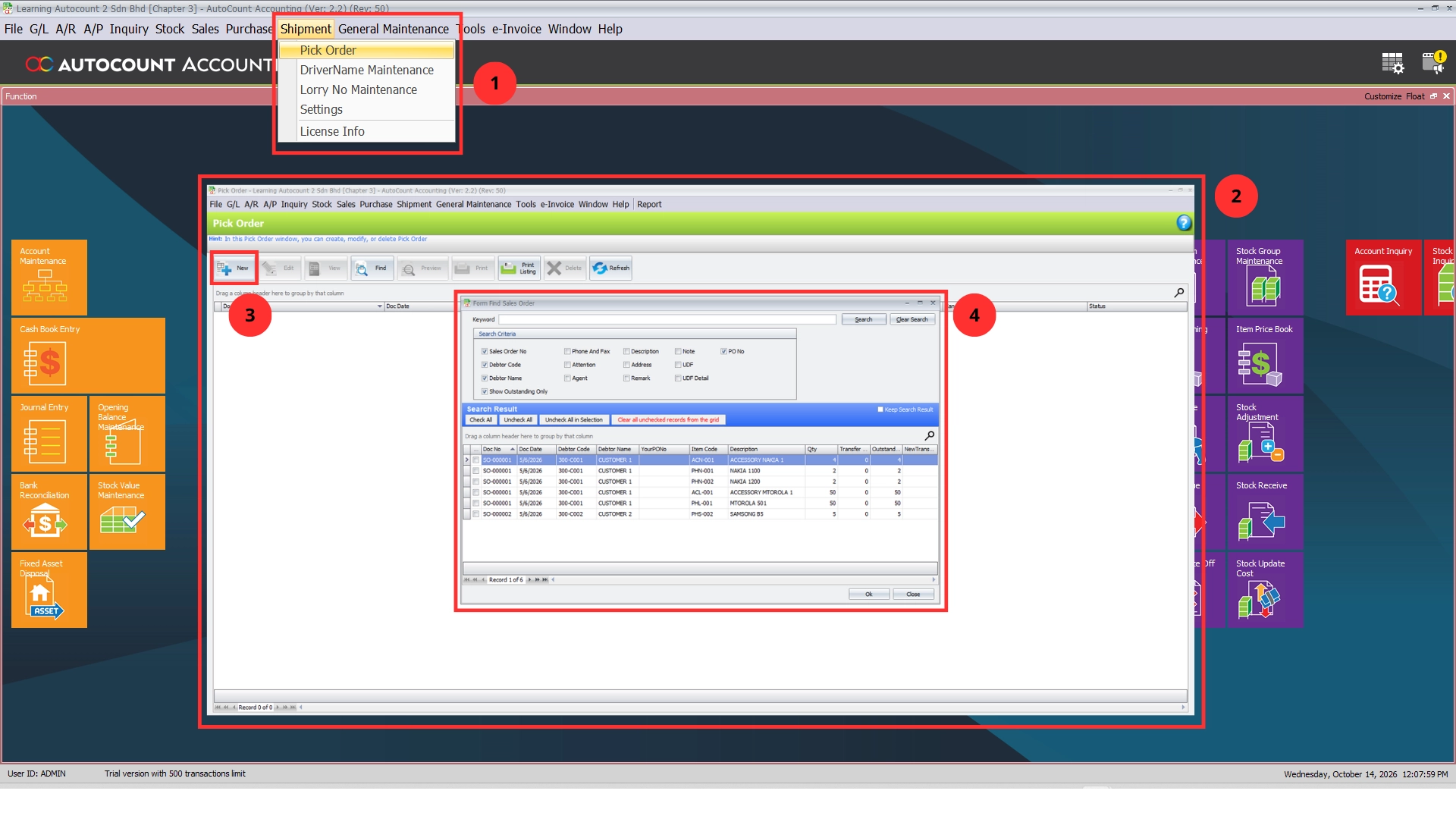
Feature 1 — Centralized Pick Order Management
The AutoCount Shipment Plugin allows businesses to consolidate outstanding Sales Order items into structured Pick Orders.
Instead of reviewing individual Sales Orders separately, warehouse teams can organize the required items into a single picking document.
The plugin supports filtering by Sales Order number, date, area code, stock location, and sales agent, helping users identify orders that require preparation.
This improves warehouse organization and reduces time spent managing individual Sales Orders.
Pro Tip:Organize Pick Orders according to warehouse picking or delivery requirements to improve operational efficiency.
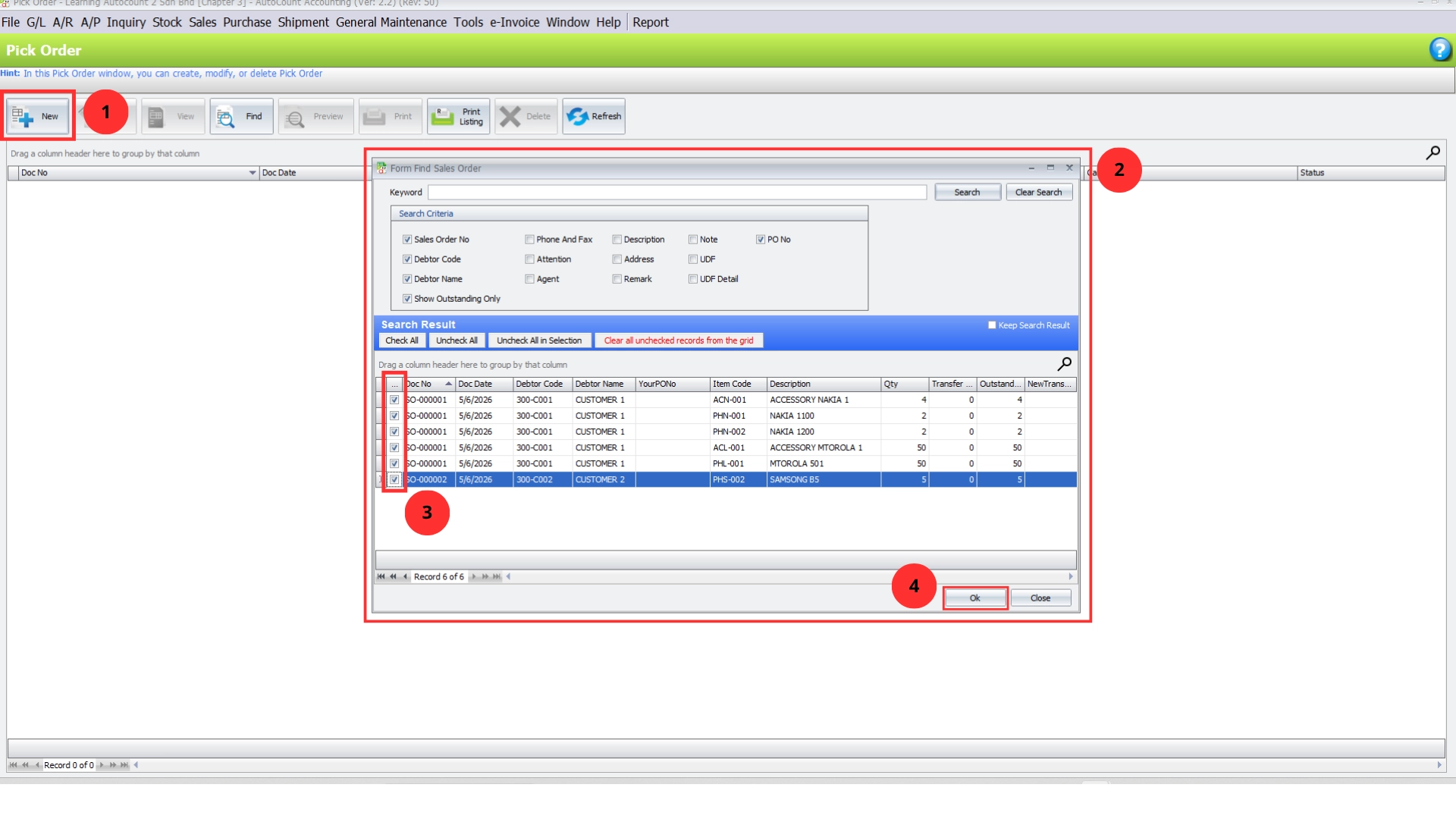
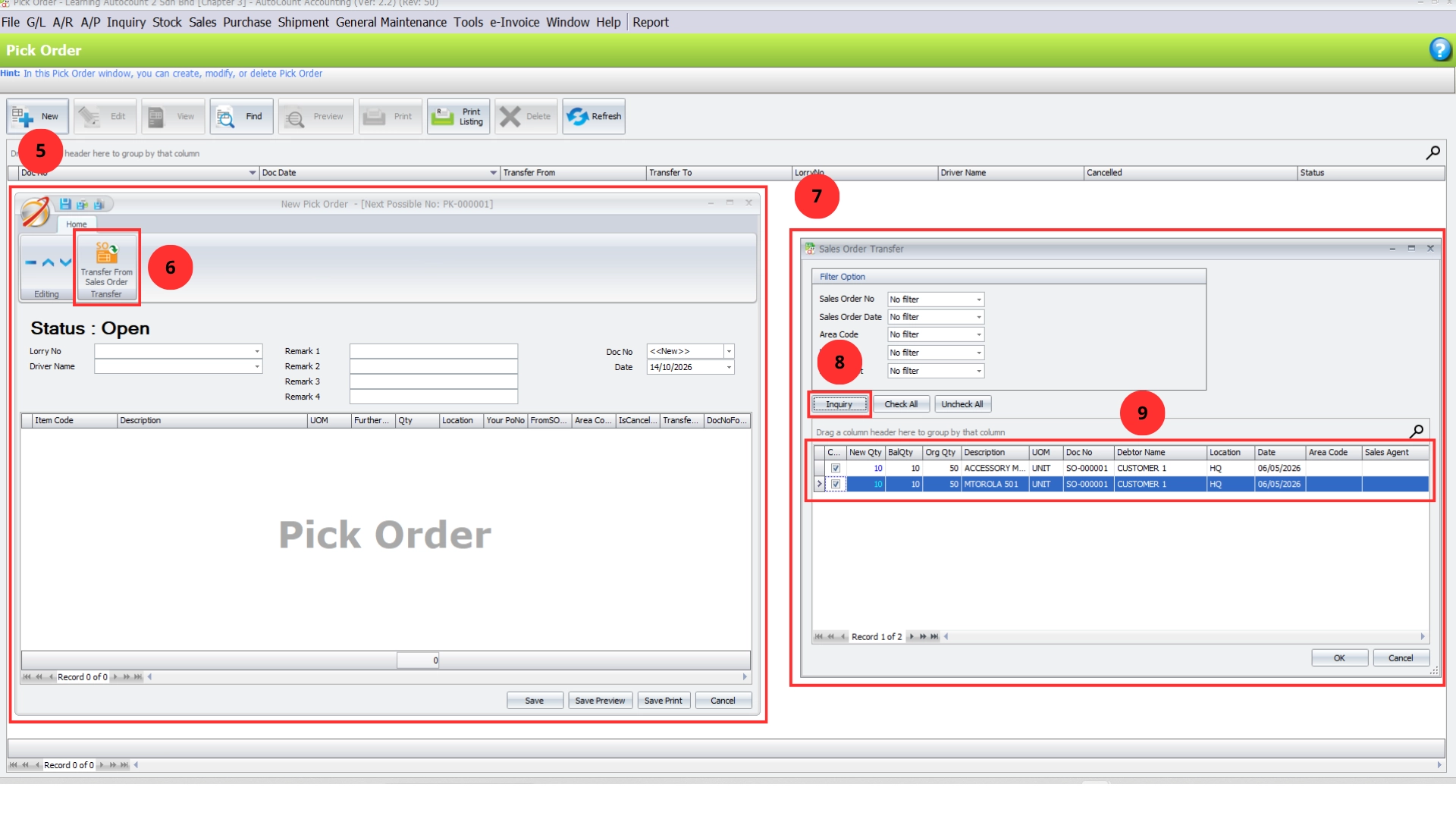
Feature 2 — Outstanding Quantity Tracking
Accurate quantity tracking is essential for minimizing shipment discrepancies.
The AutoCount Shipment Plugin provides visibility into original Sales Order quantities, outstanding balances, and selected picking quantities.
For example, when a customer orders 100 units but only 60 remain outstanding, warehouse staff can identify the remaining quantity before preparing the next shipment.
This helps businesses maintain better quantity control and reduces the risk of incorrect picking.
Pro Tip:
Review outstanding quantities before confirming Pick Orders to minimize shipment discrepancies.
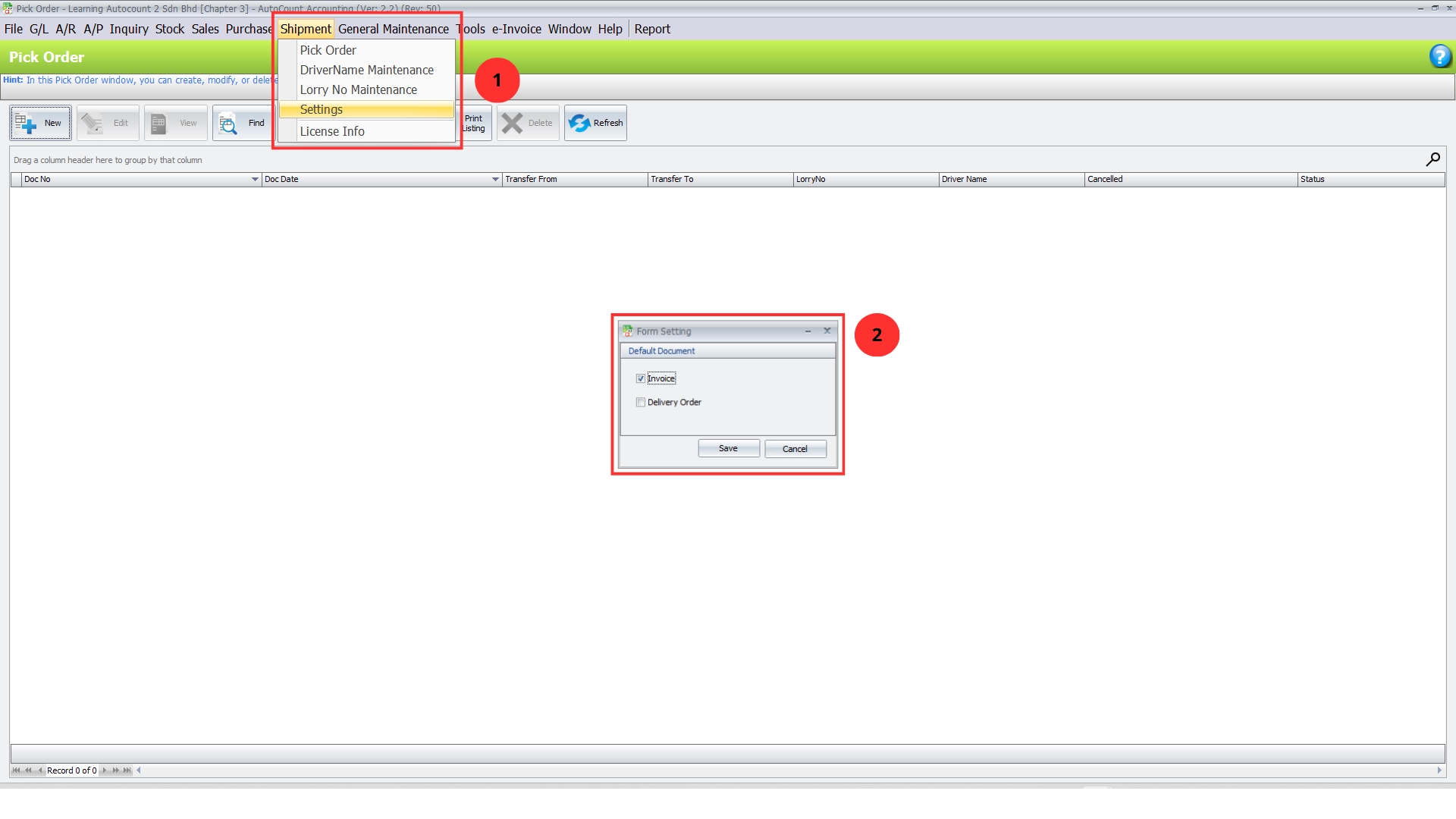
Feature 3 — Flexible Delivery Order and Invoice Processing
The AutoCount Shipment Plugin simplifies document processing by supporting transfers from saved Pick Orders into Delivery Orders or Sales Invoices.
Depending on the configured workflow, businesses can prepare the appropriate destination document without repeatedly entering the same order information.
The resulting document lines retain their Pick Order references, supporting better transaction traceability.
This helps reduce administrative work while maintaining consistency between shipment and sales documents.
Pro Tip:
Select the document workflow that matches your company’s existing sales and delivery procedures.
Feature 4 — Organized Driver and Lorry Management
Businesses handling multiple deliveries need accurate driver and vehicle information.
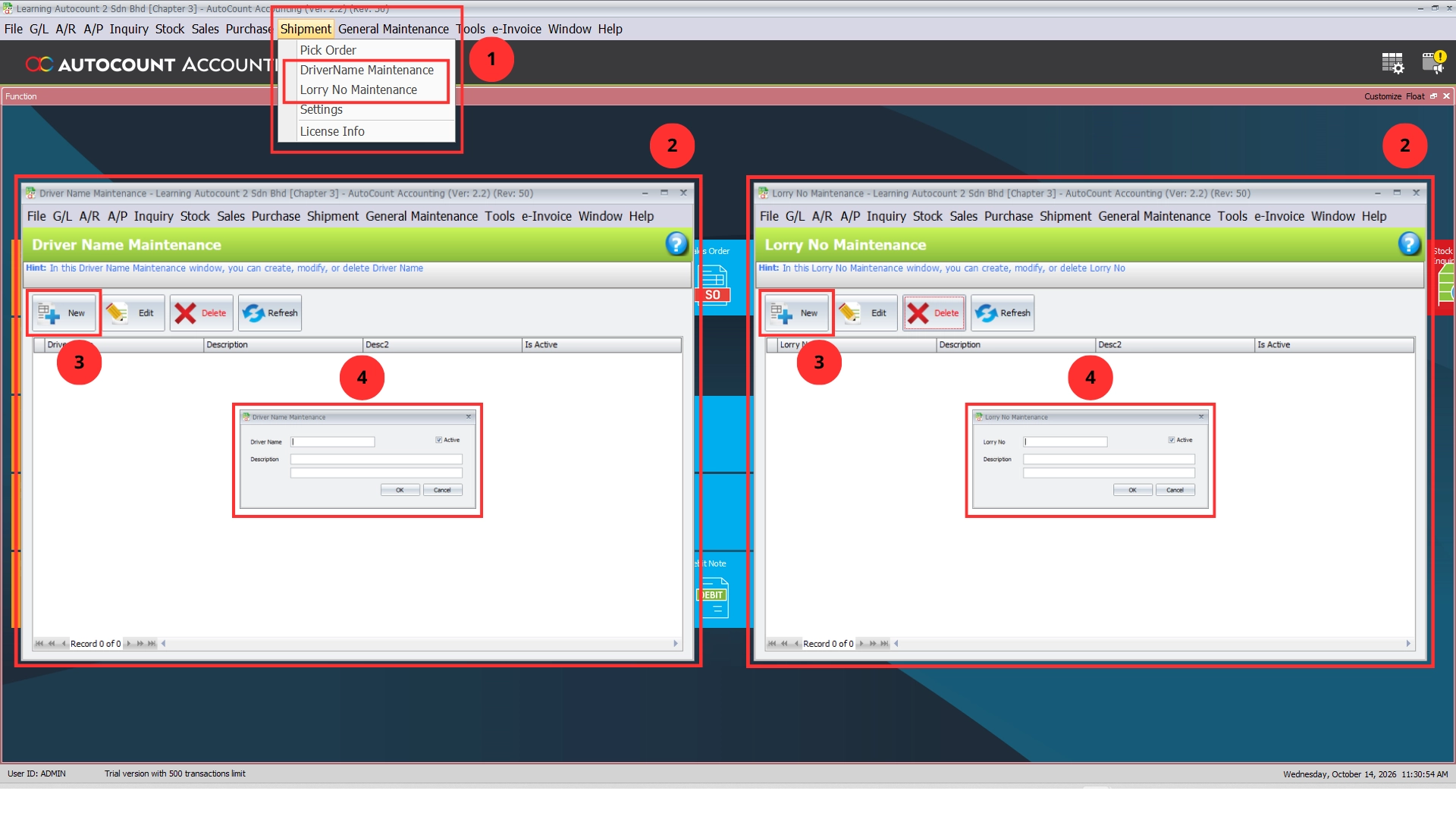
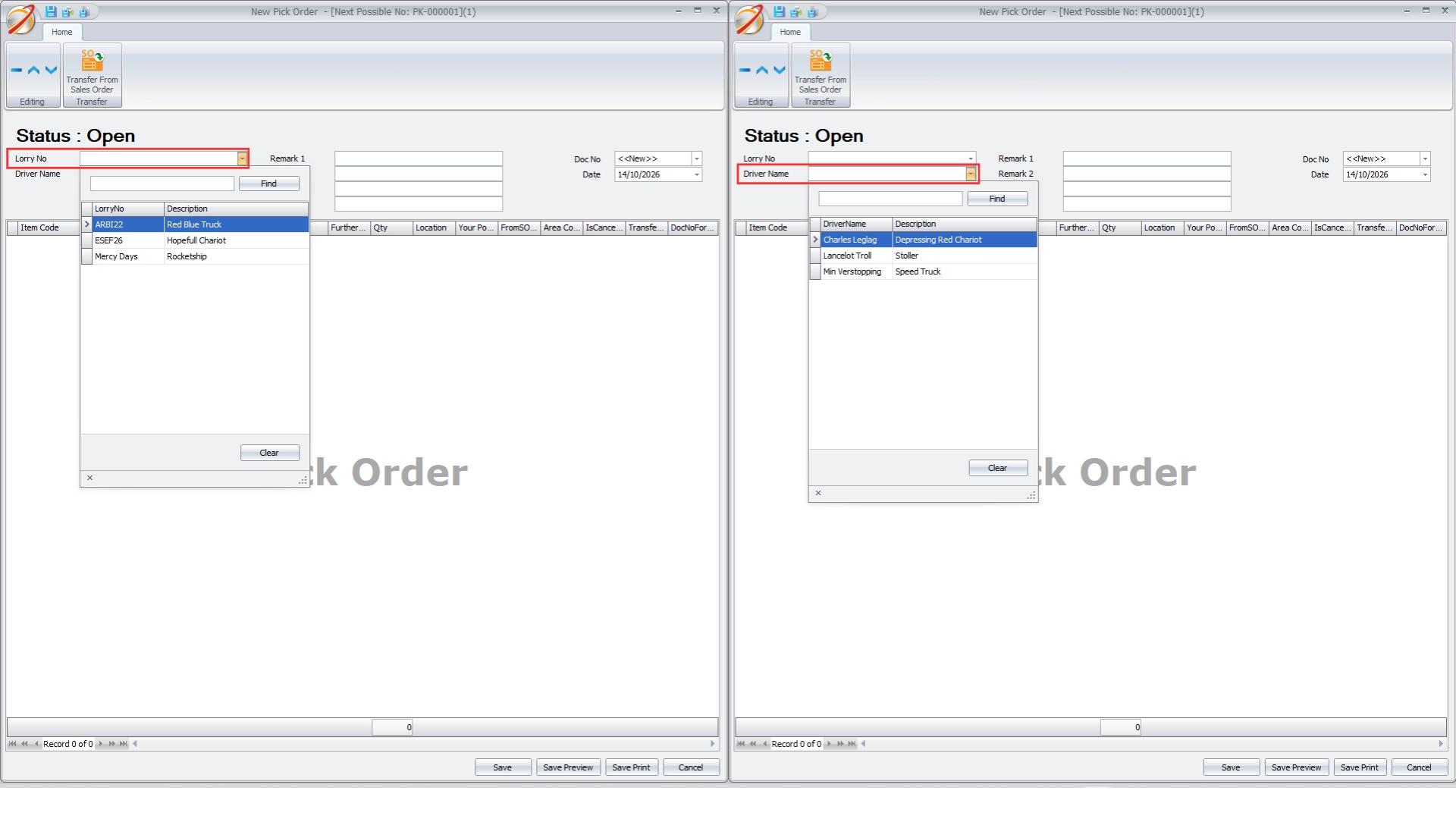
The AutoCount Shipment Plugin provides dedicated maintenance functions for recording driver names, lorry numbers, descriptions, and active status.
These records can be selected when preparing Delivery Orders that require shipment information.
This helps businesses maintain organized delivery documentation and improves coordination between warehouse and delivery teams.
Pro Tip:
Keep driver and lorry records updated to ensure accurate delivery information.
Feature 5 — Controlled Shipment Access and Permissions
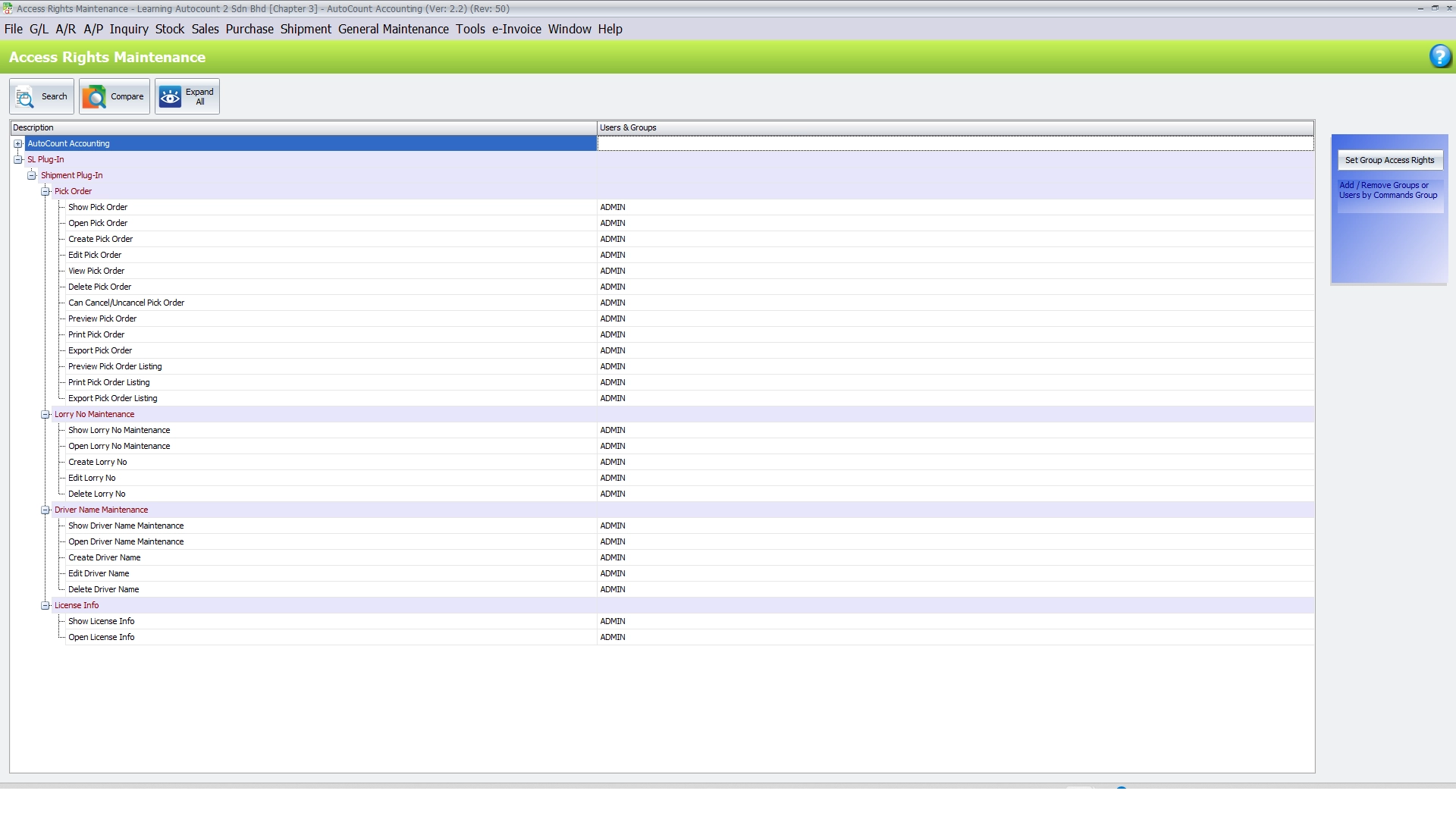
The AutoCount Shipment Plugin supports user access rights to help businesses maintain better control over shipment operations.
Administrators can assign permissions for creating, viewing, editing, deleting, and cancelling Pick Orders.
Access to driver and lorry maintenance, report previewing, printing, and exporting can also be restricted according to employee responsibilities.
This helps minimize unauthorized changes and supports a more controlled shipment management process.
Pro Tip:
Assign access rights based on employee responsibilities and review permissions when staff roles change.
Benefits of AutoCount Shipment Plugin
Faster Order Fulfilment
Streamline outstanding Sales Order processing and prepare delivery documents with less repeated administrative work.
Better Warehouse Coordination
Help warehouse teams prepare and manage picking activities more systematically.
Improved Shipment Accuracy
Reduce the risk of incorrect picking by reviewing outstanding quantities before shipment preparation.
Better Operational Visibility
Monitor pending Pick Orders and outstanding shipment quantities through dedicated reporting functions.
Conclusion
The AutoCount Shipment Plugin provides businesses with a practical solution for managing warehouse picking, shipment preparation, and order fulfilment within AutoCount Accounting.By combining organized Pick Orders, outstanding quantity tracking, flexible document transfers, driver and lorry maintenance, and shipment reporting, businesses can reduce manual work and maintain better control over daily shipment operations.For wholesalers, distributors, and businesses handling frequent customer deliveries, the AutoCount Shipment Plugin helps create a more organized and efficient order fulfilment process.
Frequently Asked Questions
What is the AutoCount Shipment Plugin?
The AutoCount Shipment Plugin is an add-on for AutoCount Accounting that helps businesses manage outstanding Sales Orders, prepare Pick Orders, process shipment documents, and maintain driver and vehicle records.
How does the AutoCount Shipment Plugin improve warehouse operations?
The plugin consolidates outstanding Sales Order items into Pick Orders and displays remaining quantities, helping warehouse teams prepare goods more systematically.
Can the plugin transfer Pick Orders into Delivery Orders or Sales Invoices?
Yes. The plugin supports transferring saved Pick Orders into either Delivery Orders or Sales Invoices, depending on the configured document destination.
Does the AutoCount Shipment Plugin support driver and lorry management?
Yes. Businesses can maintain driver names and vehicle numbers for selection on Delivery Orders when delivery-related information is required.
Can businesses monitor outstanding Pick Orders?
Yes. The plugin provides Pick Order listings and outstanding reports to help businesses review pending items and monitor fulfilment progress.
Can businesses restrict employee access to shipment functions?
Yes. Access rights can be assigned to control employee permissions for Pick Orders, maintenance records, and shipment reports.
Simplify Your Shipment Management Today!
Improve warehouse picking, organize outstanding Sales Orders, and streamline delivery preparation with the AutoCount Shipment Plugin.
Contact SL Software Solutions Sdn. Bhd. to discover how the AutoCount Shipment Plugin can support your business operations.